Manufacturing Skills Gap Challenges India Economic Growth Push Gallantt Group CEO Mayank Agrawal warns that India’s manu…
Manufacturing Skills Gap Challenges India Economic Growth Push Gallantt Group CEO Mayank Agrawal warns that India’s manufacturing expansion faces constraints due to inadequate skill development. India manufacturing skills gap india-manufacturing-skills-gap-2026 India manufacturing, skill development, Republic Summit 2026, Mayank Agrawal, Gallantt Group, economic growth business
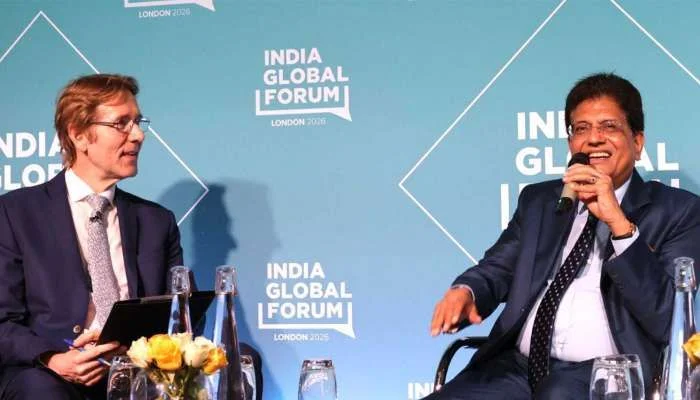
India’s manufacturing sector must drive national economic expansion over the next decade, according to Gallantt Group CEO Mayank Agrawal. Speaking at the Republic Summit 2026, he emphasized that urgent structural gaps in domestic workforce training and strategic import dependencies could constrain the country’s broader macroeconomic ambitions.
Key Highlights
- Manufacturing must serve as the primary engine for India’s economic expansion over the coming decade.
- Inadequate domestic skill development remains a critical execution gap despite significant government policy pushes.
- Achieving true economic self-reliance requires reducing import dependencies in defense, energy, and technology.
- Young entrepreneurs in tier-2 and tier-3 locations should focus on scalable problem-solving for India’s 1.4 billion citizens.
At the Republic Summit 2026, convened at the Taj Palace in New Delhi, Gallantt Group CEO Mayank Agrawal articulated a definitive case for positioning production at the core of national advancement. However, he openly addressed structural vulnerabilities currently limiting the country’s full industrial velocity.
Responding to inquiries regarding industrial contributions to national targets, Agrawal affirmed production must assume the primary role. He simultaneously cautioned that sustained macroeconomic expansion demands immediate intervention across several collateral operational areas.
Specifically, Agrawal highlighted the nation’s ongoing reliance on external supply chains within vital industrial verticals. He identified defense, energy, electronics, engineering, and technology as fields requiring accelerated domestic self-reliance.
Skill Development: The Missing Piece
For Agrawal, a singular operational discrepancy demands immediate attention. He informed attendees that skill development remains deficient across domestic labor markets, despite aggressive administrative policy support.
He stated that one very vital element is missing despite substantial government initiatives, which is skill development across our nation.
This assessment reiterates his previous public positions, challenging the standard optimistic rhetoric surrounding industrial growth. The observation underscores a persistent disconnect between central policy objectives and ground-level industrial implementation.
A Message For India’s Tier-2 And Tier-3 Dreamers
The dialogue concluded with inquiries regarding actionable advice for aspiring professionals residing within smaller municipal centers and tier-2 or tier-3 communities. The topic reflects Agrawal’s personal trajectory, having originated his career from Gorakhpur.
His guidance focused on localized problem-solving rather than replicating established international frameworks. He observed that younger generations frequently treat Silicon Valley as the definitive standard for enterprise innovation.
However, he countered that the American technology hub emerged to satisfy distinct regional requirements of its time. He urged aspiring innovators to leverage domestic market volume, focusing on infrastructure solutions for a population totaling 1.4 billion residents.
He noted that individuals who successfully develop utilities addressing the needs of 1.4 billion people will achieve immediate commercial validation across international markets.
About The Summit
The presentation occurred during a dedicated segment of the Republic Summit 2026, organized under the central theme “Great Power India: Nation First.” The forum assembled diverse leadership figures spanning commerce, public administration, and cultural sectors to deliberate on economic strategy.
The proceedings concluded with summit organizers presenting Agrawal with an official commendation acknowledging his corporate contributions.
Presented By: RP-Sanjiv Goenka Group | Co-Presented By: ZOHO & TVS Motor Company | Powered By: Sister Nivedita University | Co-Powered By: Kalyani & Bharat Forge Ltd, Samtel Avionics, Ravin Group and MeghaShrey, Ease My Trip | State Partners: UP Govt, Haryana Govt, Andhra Pradesh Govt, Uttarakhand Govt and Assam Govt | Housing Partner: Gaurs Group | Prayer Partner: Cycle Agarbatti | Skincare Partner: Dr Rashel | Knowledge Partner: Shardha University | Stainless Partner: Jindal Stainless | Vision Partner: Alcon | Special Partners: Sanskriti University, Gallantt Group, Pan Bahar, Krishna’s Ayurveda, BackBay, Wagh Bakri, Ferns N Petals, Nandini and Mysore Sandals | Celebration Partner: Allied blenders and distillers
Future Outlook
As India targets a larger share of global supply chains by 2026 and beyond, the intersection of industrial capacity and labor capability will dictate economic outcomes. The transition from import reliance to domestic manufacturing hinges entirely on upgrading technical training infrastructure to match global standards.
FAQs
What did Gallantt Group CEO Mayank Agrawal identify as the primary challenge for India’s manufacturing sector?
Agrawal highlighted that despite substantial government policy initiatives, inadequate skill development within the workforce remains a primary gap hindering the country’s manufacturing expansion.
Which strategic sectors did Mayank Agrawal identify as overly dependent on imports?
He specifically named defense, energy, electronics, engineering, and technology as core strategic sectors where India must reduce its external reliance and establish greater domestic production capabilities.
What was the central theme of the Republic Summit 2026?
The summit was organized under the central theme “Great Power India: Nation First,” focusing on the country’s economic growth, industrial strategy, and future geopolitical direction.
What advice did Mayank Agrawal offer to young entrepreneurs from tier-2 and tier-3 cities?
He advised young innovators to focus on solving localized problems tailored to the massive scale of India’s 1.4 billion population rather than attempting to duplicate business models from Silicon Valley.