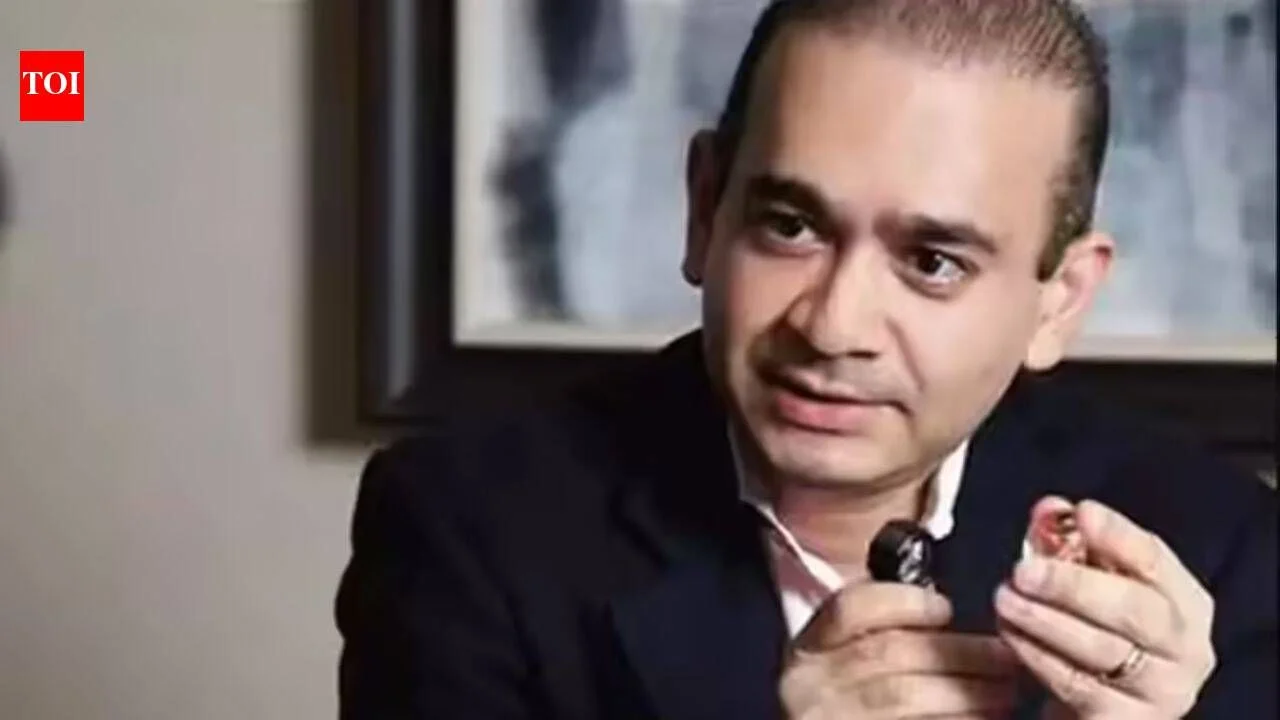
Nirav Modi Ordered to Pay Bank of India Over $10.7 Million
A London High Court judge ordered fugitive diamond merchant Nirav Modi to pay Bank of India more than $10.7 million, ruling that his personal guarantee for a commercial loan remains legally binding and enforceable.
Key Highlights
- The London circuit commercial court validated a personal guarantee signed by Nirav Modi in 2013.
- The judicial ruling mandates the repayment of a $4.1 million principal sum plus accrued interest.
- Modi failed to provide a viable legal defense to explain why the public sector bank was not entitled to the funds.
- The court rejected Modi’s claims that he never received formal default notices from the financial institution.
Simon Tinkler delivered the judgment in the London circuit commercial court on Tuesday, declaring that Modi is legally responsible under the personal guarantee to the financial institution for the outstanding principal amount of $4.1 million.
The court noted that interest computed under the specific framework established by the bank must be added to this figure. Tinkler emphasized that Modi failed to offer any legal defense to clarify why the banking institution lacked entitlement to that specific sum.
Modi, who resides in a London detention facility while legally contesting his extradition to India, claimed during proceedings that the guarantee could not be enforced. He further asserted that he did not receive valid payment demands from the bank and that no material adverse effect justified the early termination of the credit facility.
Bank of India originally extended capital to one of Modi’s corporate entities, Firestar Diamond FZE in Dubai, during July 2012. Modi subsequently executed a personal guarantee to secure the credit arrangement on August 3, 2013.
In early 2018, following widespread public disclosures regarding an alleged multibillion-dollar fraud perpetrated against Punjab National Bank by Modi, Bank of India elected to accelerate and recall the loan. Formal payment demands dispatched to Firestar and Modi in March 2018 and April 2018 received no response.
On March 8, 2024, Bank of India successfully secured a summary judgment covering the principal debt of $4.1 million alongside accrued interest. The state-backed financial institution subsequently served an additional demand notice to Modi in October 2025.
Tinkler observed that from mid-February 2018, it was entirely reasonable to deduce that the corporate borrower and every entity within the Firestar Group would experience severe, negative operational consequences from the alleged PNB fraud scandal.
The judge added that the overall financial worth of the personal guarantees executed by Modi had very likely suffered substantial impairment during that period.
The judicial official highlighted a communication from February 17, 2018, in which Modi transmitted an email to the bank stating that intense media scrutiny triggered immediate law enforcement searches and operational seizures.
Modi’s correspondence admitted that these disruptions caused Firestar International Pvt Ltd and Firestar Diamond International Pvt Ltd to effectively stop operating as going concerns, thereby compromising the group’s capacity to settle its liabilities with banking lenders.
During the trial, Modi denied accepting the April 2018 and October 2025 demand notices, claiming he did not reside in India when they were sent. Tinkler stated he was satisfied that both notices achieved successful delivery.
The judge underscored that the October 2025 notice reached HMP Thameside, where Modi was incarcerated. Furthermore, Modi had transmitted a physical copy of the April 2018 demand notice to his own legal representatives in 2019, leading Tinkler to declare the guarantee fully enforceable.
History of the Firestar Debt Dispute
The legal battle in London stems from a 2012 credit facility extended by Bank of India to Firestar Diamond FZE, a Dubai-based subsidiary controlled by Modi. The financial architecture of the loan relied heavily on Modi’s global credit standing, prompting the execution of his personal guarantee in 2013. When the $2 billion Punjab National Bank fraud allegations surfaced in 2018, Modi’s international jewelry empire collapsed almost immediately under global regulatory scrutiny. This collapse triggered systemic defaults across multiple banking syndicates, forcing public sector lenders to initiate asset recovery suits in international courts to honor the personal indemnities signed by the high-profile jeweler.
FAQs
What did the London High Court rule regarding Nirav Modi?
The court ruled in favor of Bank of India, holding that diamond merchant Nirav Modi is legally liable under a personal guarantee to pay the bank over $10.7 million, which includes a $4.1 million principal sum plus calculated interest.
Where is Nirav Modi currently located?
Nirav Modi is currently held at HMP Thameside jail in London, where he has been detained while fighting his extradition to India to face separate fraud and money laundering charges.
Why did Bank of India recall the loan in 2018?
Bank of India recalled the credit facility extended to Modi’s Dubai firm, Firestar Diamond FZE, after news emerged regarding his alleged massive financial fraud at Punjab National Bank, which severely impaired his financial guarantees.
What defense did Nirav Modi present during the trial?
Modi argued that the personal guarantee was completely unenforceable, that he never received formal default demands from Bank of India, and that there was no valid material adverse effect to justify terminating the loan.