Brooklyn Library Launches Paid Dottie Fellowship
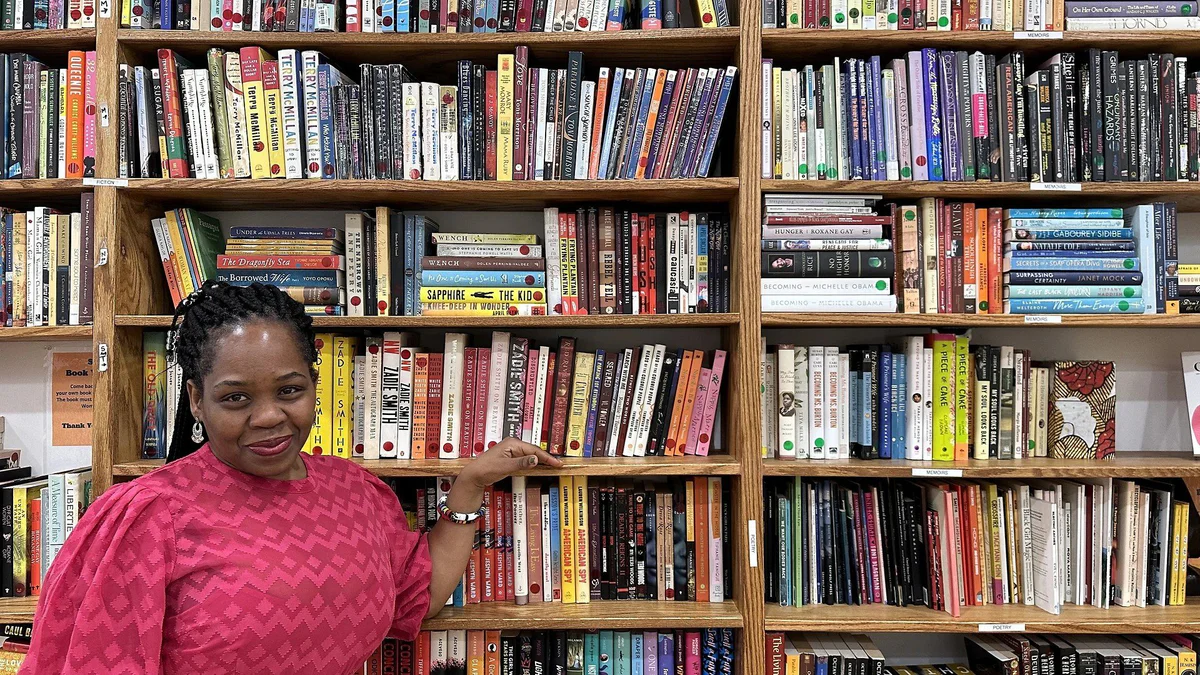
Brooklyn’s Free Black Women’s Library has launched the Dottie Fellowship to fund its first paid staff position in Bedford-Stuyvesant, library founder OlaRonke Akinmowo said.
The fellowship is part of Akinmowo’s plan to reduce the library’s reliance on her unpaid work and keep it open after she steps away. It is named for Dorothy Porter Wesley, a Howard University librarian who collected and preserved Black history.
“Hopefully what’s next is more growth, more expansion,” Akinmowo said in an interview Tuesday. Akinmowo wants more room for books and programs in Brooklyn. A move would depend on funding and finding a suitable space.
Akinmowo started the project in 2015 with 100 books by Black women on the steps of a Brooklyn brownstone. The library said its collection now holds more than 5,000 books by Black women and Black nonbinary authors.
Before it had a permanent address, the library traveled as an art installation. Akinmowo, a Brooklyn-born artist and set dresser, carried books in boxes and suitcases to churches, galleries and community gardens.
When the pandemic halted in-person gatherings, Akinmowo turned to crowdfunding to open a storefront.
At 226 Marcus Garvey Boulevard, visitors can read, write or work without a library card. The Free Black Women’s Library invites visitors to bring a book by a Black woman or Black nonbinary author and exchange it for another.
Readers can keep the book they choose or bring it back for a future trade.
The storefront also serves neighbors who come for practical help. The library’s on-site services include:
- A free store distributes gently used goods.
- A pantry provides menstrual supplies.
- Public laptops are available for job and Medicaid applications.
- The library said two social workers are on hand to help visitors.
The library offers free writing workshops, film screenings, book signings and story time for children. Its reading group meets online each month to discuss books and shorter works by Black women and Black nonbinary authors.
The library said authors often join those conversations.
Akinmowo said the neighborhood needed a gathering place for Black residents as coffee and wine shops moved into spaces that could have served the community. With schools and public libraries across the country debating which books to keep, Akinmowo described protecting access to books by Black women as increasingly urgent.
Akinmowo said the library plans to digitize its collection. The founder is also exploring a mobile app that could reach readers around the world.