AIIA Hosts Run for Yoga Ahead of International Yoga Day
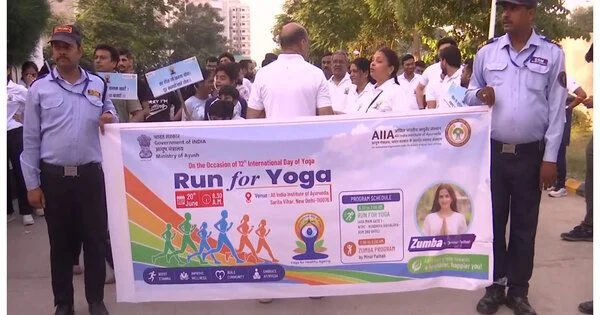
The All India Institute of Ayurveda organized a vibrant ‘Run for Yoga’ and Zumba session in New Delhi on Saturday. The pre-International Yoga Day event emphasized the critical need for daily practice to manage metabolic disorders and promote healthy ageing across all age demographics.
Key Takeaways
- The All India Institute of Ayurveda organized a ‘Run for Yoga’ and Zumba session in New Delhi ahead of International Yoga Day on June 21.
- AIIA Director Prof. Pradeep Kumar Prajapati urged individuals to practice yoga for 365 days a year as a healthy anti-ageing tool.
- Clinical studies conducted at AIIMS demonstrate that yoga interventions yield highly positive outcomes for cardiac patients.
- The official UN theme for the 2026 global observance is ‘Yoga for Healthy Ageing,’ marking its 12th anniversary.
New Delhi fitness enthusiasts and healthcare professionals gathered as the All India Institute of Ayurveda launched a pre-International Yoga Day event on Saturday. The institution synchronized a spirited ‘Run for Yoga’ alongside an energetic Zumba gathering, collectively emphasizing the necessity of adopting daily wellness routines.
During the gathering, Professor Pradeep Kumar Prajapati, serving as the Director of the All India Institute of Ayurveda, delivered an address emphasizing that this global wellness celebration demands continuous commitment. He forcefully stated that citizens must not isolate their wellness activities to a solitary day.
“Yoga represents a highly effective, natural anti-ageing instrument that every individual must prioritize. While the public typically engages in exercises specifically on International Yoga Day, maintaining this therapeutic physical routine across all 365 days remains absolutely essential for long-term health,” Prajapati stated during an interview.
The Director further explained that allocating even a minor portion of one’s morning schedule to standard holistic practices provides substantial protection against severe illnesses. Consistent execution can empower modern communities to actively counteract widespread corporate lifestyle ailments and chronic physical conditions.
“Devoting a brief 15 to 20 minutes daily to specialized movements, executing personal postures, and completing distinct asanas allows individuals to successfully regulate metabolic imbalances and control various lifestyle disorders,” the medical director explained during the physical fitness assembly.
Prajapati highlighted contemporary clinical research confirming the definitive advantages of ancient physical therapies. He noted that formal clinical evaluations demonstrated remarkably favorable physical rehabilitation outcomes among cardiovascular patients who routinely participated in structured, yoga-centric medical interventions.
“Scientific evidence validates this approach following a comprehensive evaluation conducted at the All India Institute of Medical Sciences. Cardiac patients experienced exceptional recovery metrics through integrated therapeutic yoga regimens, with multiple academic research publications detailing these clinical breakthroughs,” he added.
This specialized public gathering was executed under a broader framework of national promotional campaigns preceding the grand International Yoga Day celebration. The global event receives widespread international observance annually on June 21 to foster public healthcare and holistic physical development worldwide.
Earlier that morning, Uttar Pradesh Deputy Chief Minister Brajesh Pathak joined thousands of fitness enthusiasts at the prominent KD Singh Babu Stadium located in Lucknow. The state leader actively participated in a massive wellness assembly, strongly advising regional citizens to seamlessly weave these traditional exercises into daily life.
Speaking to reporters, Deputy Chief Minister Pathak asserted that regular physical postures significantly elevate both psychological stability and physical endurance. The state official formally appealed to individuals across the country, urging the rapid domestic adoption of systematic wellness routines on a daily basis.
International Yoga Day is celebrated across the globe every year on June 21. This global timeline was officially instituted after the United Nations General Assembly ratified a dedicated resolution in December 2014, following an initial global wellness framework proposed by Indian Prime Minister Narendra Modi.
Official documentation from the United Nations confirms that 2026 represents the 12th official annual iteration of this international wellness movement. The designated central theme guiding this current annual observation is formally announced as ‘Yoga for Healthy Ageing,’ focusing on preserving lifelong physical independence.
Leading up to the formal global commemoration, extensive educational workshops, public demonstrations, and community outreach campaigns emerged across various domestic states and foreign territories. These worldwide initiatives aim to maximize public literacy regarding the therapeutic advantages and deep preventative capabilities of regular practice.
Historical Context
The establishment of International Yoga Day trace back to 2014, when Indian Prime Minister Narendra Modi proposed the concept during his address at the 69th session of the United Nations General Assembly. The resolution received unprecedented global backing, with 177 nation states co-sponsoring the mandate, leading to its official annual enforcement on June 21. Over the past 12 years, the movement has transitioned from a traditional cultural practice into a scientifically backed global public health directive recognized by international medical bodies.
FAQs
What is the theme for International Yoga Day 2026?
The official United Nations theme for 2026 is ‘Yoga for Healthy Ageing,’ which emphasizes helping individuals across all age groups remain active, independent, and engaged through daily practice.
How much daily yoga practice did the AIIA Director recommend?
AIIA Director Professor Pradeep Kumar Prajapati recommended dedicating at least 15 to 20 minutes every day to practicing asanas and custom yoga poses to effectively manage metabolic and lifestyle disorders.
Which institutions have researched the cardiac benefits of yoga?
Clinical research conducted at the All India Institute of Medical Sciences demonstrated highly successful outcomes and positive rehabilitation results for cardiac patients who underwent yoga-based interventions.