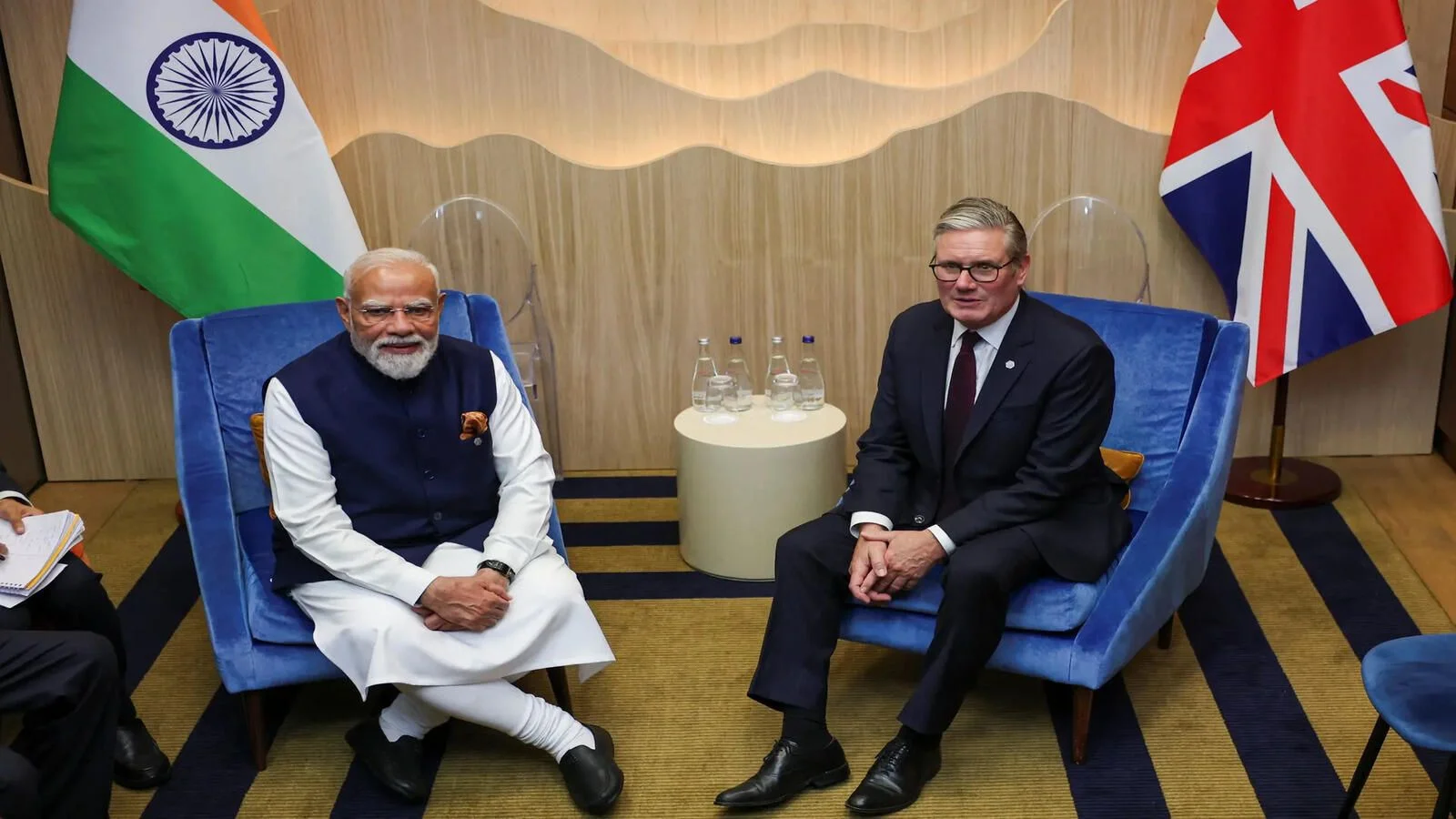
India UK Trade Pact to Benefit 75,000 Professionals
Indian professionals transferred temporarily to Britain by domestic firms will secure sweeping relief from host-country social security levies. The landmark bilateral arrangement, taking effect July 15, 2026, is projected to deliver financial advantages to a vast majority of eligible corporate personnel deployed overseas.
Key Highlights
- Exemption Period: Indian personnel sent temporarily to the UK escape local social security levies for up to 5 years.
- Corporate Savings: The Double Contribution Convention will save businesses and professionals more than $500 million annually.
- Steel Protections: Around 85% of India’s steel shipments to the UK remain shielded from incoming British trade safeguards.
- Economic Expansion: The broader free trade pact is projected to elevate bilateral commerce by £25.5 billion over the long term.
An estimated 90% to 95% of Indian experts stationed with domestic entities in Britain will profit from the newly ratified social security treaty, an official source confirmed.
Under the Double Contribution Convention (DCC) protocol, slated to commence on July 15, 2026, personnel moved temporarily from India to British offices will be spared from local social security tax overheads for up to 5 years.
India-UK free trade deal to take effect on July 15, opening 99% of exports to tariff-free access
Government sources noted that just $137 million, representing 15% of the $900 million in total Indian steel shipments bound for the UK, will face impending British safeguard regulations. The bilateral negotiating teams finalized an administrative consensus regarding this critical friction point on Wednesday morning. Trade access for the remaining 85% of shipments was preserved via country-specific allocations and residual pooling measures under the comprehensive commerce deal.
The implementation of the DCC will provide an immense fiscal boost to Indian technology firms, whose expatriate professionals currently deposit roughly $0.5 billion each year into the British social security system. Over 75,000 Indian corporate personnel alongside more than 900 enterprises are poised to gain from the policy, which prevents temporary staff from facing overlapping tax obligations across both jurisdictions. The typical annual compensation for these white-collar professionals ranges from £40,000 to £50,000, with approximately 15% of that income currently directed toward British social security pools.
Typically, an international worker becomes eligible to claim back localized social security benefits in the UK only after completing roughly 10 years of continuous domestic service.
“If an employer is contributing in India for the social security of the employee, they do not have to pay in the UK. For that, they have to share a certificate of coverage. It is for Indian companies and prospective in nature,” the official said.
This specific regulatory immunity does not apply to citizens of India who are directly hired by non-Indian multinational corporations operating inside the British territory.
Data shows that India’s services outbound trade to the UK reached $21.6 billion in 2024, against inbound services valued at $13.7 billion. During fiscal 2024, physical goods outbound shipments reached $12.9 billion, while incoming goods from the UK stood at $8.4 billion.
The recently introduced British steel protection mechanisms had developed into a severe hurdle for the activation of the Comprehensive Economic and Trade Agreement (CETA), which was formally finalized on July 24, 2025, and is scheduled for implementation on July 15, 2026.
These protective limits, designed to slash tariff-free foreign steel import allowances by 60% beginning July 1, 2026, apply globally to all trading nations. Shipments crossing these designated limits will face an elevated tariff of 50%, up from the earlier 25% baseline.
“Overall, 188 items accounting for $137 million worth of steel exports from India to Britain were covered by these safeguard measures,” said an official.
Beyond explicit country quotas, Indian manufacturers can utilize residual import limits distributed via a rapid first-come, first-served allocation framework open to international rivals. Furthermore, Indian entities can tap into the Authorised Use Scheme, enabling designated industrial sectors to bring in steel at negligible or zero tariffs if the metals are designated for certified industrial functions.
“As an outcome, India will not lose market access. India and the UK have struck a balanced outcome without impacting the agreement and processes did not have to be started again,” the official said.
The official noted that strategic rebalancing allowed both sides to craft an operational solution without disturbing the text of the pre-signed treaty. This process differed significantly from ongoing European Union discussions, where live free-trade talks continue to face active negotiations regarding steel parameters.
Over the coming 28 days, authorities will publish official customs circulars and process frameworks to enable exporters to commence immediate trading under the CETA terms.
India to allow import of 3.78 lakh UK cars at concessional duty in first 15 years of trade pact
New Delhi initially registered its deep apprehensions regarding the proposed British safeguards with the World Trade Organization in May 2026, though the friction has been settled via bilateral concessions.
Regarding the upcoming Carbon Border Adjustment Mechanism slated for 2027, authorities noted the framework remains unfinalized, adding that CETA includes built-in adjustment tracks to incorporate the regulations later if required.
“We have been engaged in the last two months to resolve the issues… the key issue holding us back was the steel measure,” the official said, noting that specific exclusions were carved out for 6 core steel groups, including hot-rolled sheets and strips.
Future Outlook
The implementation of CETA is poised to alter the long-term macroeconomic ties between New Delhi and London. Analysts expect the trade framework to boost the United Kingdom’s gross domestic product by £4.8 billion while expanding total bilateral trade volumes by £25.5 billion as market integrations mature.
Indian exporters will gain an immediate 7% to 10% tariff edge, placing domestic goods on equal footing with international competitors. The deal opens up zero-duty entry for over 99% of Indian goods into a British consumer market valued above $500 billion. Future phases of the pact will systematically reduce import taxes on premier British exports including automobiles, cosmetics, and whiskies, while securing reciprocal duty rollbacks for Indian textiles, agricultural items, and footwear.
FAQs
What is the Double Contribution Convention under the India-UK deal?
The Double Contribution Convention is a bilateral agreement that prevents temporary workers from paying social security taxes in both nations simultaneously. Under this rule, Indian professionals transferred to the UK by Indian firms do not have to pay British social security taxes for up to 5 years if they maintain their contributions in India.
When does the India-UK free trade pact take effect?
The Comprehensive Economic and Trade Agreement and its accompanying social security protocol are scheduled to officially come into force on July 15, 2026.
How does the agreement protect Indian steel exports?
The deal secures market access for 85% of India’s steel exports to the UK, keeping them outside the scope of Britain’s new 60% quota cuts. Only $137 million of India’s total steel shipments will face the safeguard regime, with the rest protected by country-specific quotas and the Authorised Use Scheme.
Which professionals qualify for the social security tax exemption?
The tax exemption applies exclusively to Indian professionals who are employed by Indian companies and temporarily transferred to work in the UK. The exemption is not available to Indian citizens working directly for non-Indian foreign corporations in Britain.