India Targets Deeper UAE Diaspora Capital As FCNR Deposits Hit $33.7B
India is actively leveraging its $166 billion Non-Resident Indian (NRI) deposit base to attract deeper financial participation from its diaspora in the UAE. Top policymakers and banking executives at a major Dubai conclave unveiled new wealth frameworks designed to channel Gulf capital directly into India’s high-growth domestic economic sectors.
Key Highlights
- India’s total NRI deposit base has reached approximately $166 billion, which includes $33.7 billion secured in Foreign Currency Non-Resident (FCNR) accounts.
- The State Bank of India (SBI) introduced a leveraged FCNR-linked wealth creation structure available to international investors until September 2026.
- Financial analysts project India’s current $4.5 trillion economy will expand to $10 trillion by 2030 and potentially hit $40 trillion by 2045.
- Private market opportunities remain vast, with over 2.11 million active Indian corporations contrasting against only 7,500 publicly listed entities.
The Indian Business & Professional Council (IBPC Dubai) recently convened The India Wealth Window 2026 at the Taj Dubai, Business Bay. This high-level financial assembly brought together institutional investors, sovereign wealth managers, and banking executives to dissect capital market opportunities arising from India’s structural economic acceleration.
A primary focus centered on newly structured Foreign Currency Non-Resident (FCNR) deposit mechanisms, venture capital entry points, and expanded secondary market options.
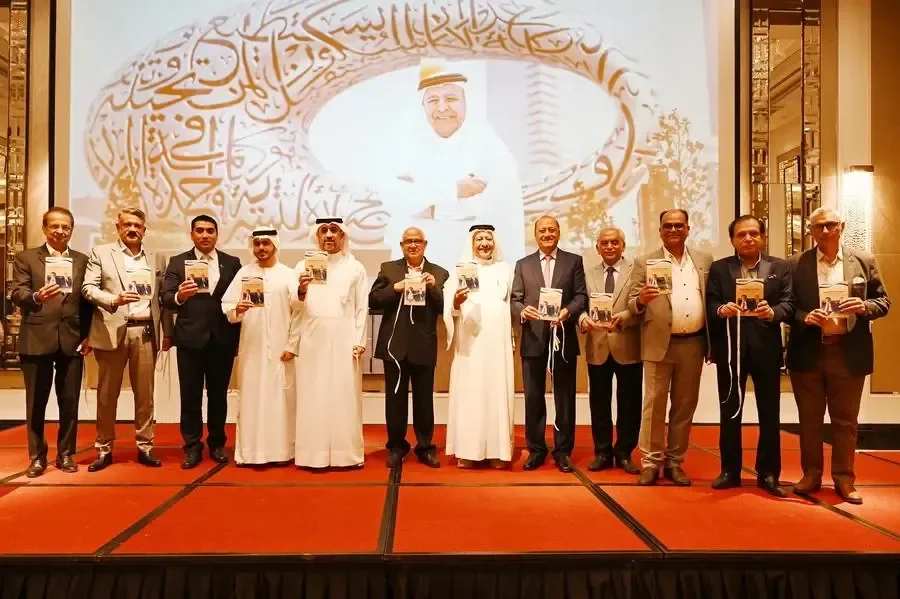
A major milestone during the evening proceedings was the official publication release of A True Story, a personal memoir authored by the prominent UAE diplomat and senior statesman, HE Mirza Hussain Al Sayegh.
The volume offers an authoritative, first-hand historical account detailing the developmental decades of UAE-India bilateral relations. The narrative pulls directly from Al Sayegh’s archival experiences within the early UAE diplomatic corps, specifically tracking his strategic deployment to India immediately following the formal establishment of bilateral ties.
Mr. Suresh Kumar, serving as the Chairman Emeritus of IBPC Dubai, managed the formal introduction of the author alongside the designated guest of honour.
During his address at the launch, Al Sayegh re-examined his diplomatic tenure in New Delhi during the 1970s, underscoring the deep institutional trust, mutual warmth, and foundational geopolitical cooperation that characterized the relationship. He detailed the historical treaties and commercial frameworks executed during that decade, emphasizing their role in constructing today’s multi-billion-dollar trade corridor. Furthermore, he outlined his family’s generational merchant banking ties to Mumbai, highlighting the enduring human connections underpinning modern trade.
“The structural obligation of our contemporary generation is to continually reinforce the economic relationship between these two sovereign nations,” Al Sayegh stated.
Following the book’s presentation, Sunny Narang, serving as the Convenor of the IBPC Dubai FSCM focus group, introduced the financial panel speakers and organized the thematic direction of the subsequent investment debate.
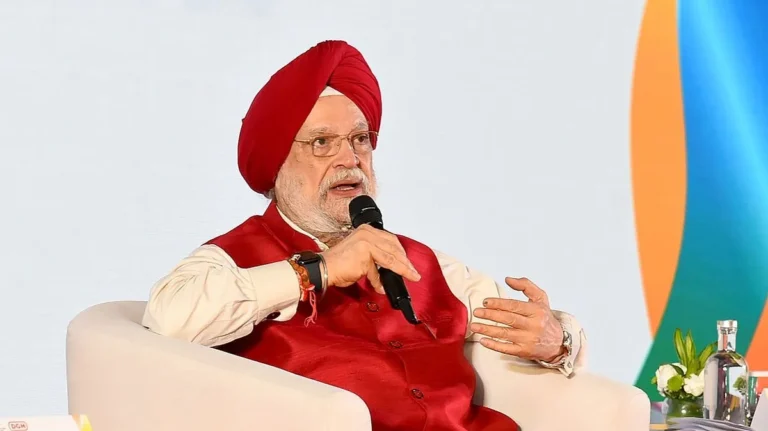
Delivering his keynote presentation to the assembly, Dr. Nilay Ranjan Singh, Chief Executive Officer of the State Bank of India (DIFC), clarified that the Indian state requires consistent foreign capital inflows. This requirement persists even though India’s central bank maintains historic foreign exchange reserves currently valued above $680 billion.
“India requires your capital pools, and your capital pools require the yields of the Indian market,” Dr. Singh told the gathered audience of diaspora entrepreneurs.
Dr. Singh outlined India’s macroeconomic roadmap to achieve full developed-nation status under the federal Viksit Bharat initiative, emphasizing the role of Gulf-based non-residents. The UAE remains a primary global node for inward remittances to India, anchoring the economic corridor.
A core focal point of the technical presentations centered on SBI’s specialized FCNR-based wealth creation structure, which allows qualified expatriates to couple foreign currency deposits with structural leverage options. This specialized investment window will close permanently in September 2026, representing a strict time-bound opportunity for global wealth managers.
Piyush Jhunjhunwala, the Founder of Stockify Fintech, provided a highly optimistic macro analysis of the Indian financial ecosystem, positioning the nation as a premier long-term asset destination.
He stated that India functions as a $4.5 trillion economy advancing at an annual GDP growth rate of roughly 7%. Institutional models indicate the economy is positioned to reach $10 trillion by 2030 and could scale to $40 trillion by 2045.
“Global capital is overallocating to India because the economy is in a secular expansion phase,” Jhunjhunwala stated.
He further pointed out India’s stark demographic advantages, noting that a median national age of approximately 28 years provides an enduring foundation for domestic manufacturing, consumer demand, and digital service consumption.
During the executive panel session, which was moderated by the co-convenor of the IBPC Dubai FSCM focus group, Mahesh Ramakrishnan, Jhunjhunwala pushed asset managers to lengthen their investment horizons, noting that avoiding growth equity presents the highest systemic portfolio risk.
In his baseline introductory briefing, Dr. Sahitya Chaturvedi, Secretary General of IBPC Dubai, drew attention to the extensive volume of unmonetized corporate equity available within India’s broader enterprise ecosystem. India counts more than 2.11 million legally active corporate entities, yet fewer than 7,500 firms are listed on public bourses, highlighting massive arbitrage opportunities in private equity and venture capital.
He characterized the conclave as occurring at a critical structural turning point for India-UAE ties, as bilateral integration accelerates across cross-border banking, technology transfers, and physical trade.
The financial assembly closed with a uniform consensus among delegates that the India-UAE economic corridor is entering a sophisticated macroeconomic phase anchored by direct investment, joint financial technology, and structural cross-border joint ventures.
Driven by accelerating capital movements, updated free trade agreements, expanding venture capital networks, and consistent bilateral state visits, experts classify the India-UAE axis as an elite global economic corridor. The release of A True Story served as a timely reminder that current record-breaking investment volumes rest upon a foundational infrastructure of decades-long diplomatic trust and mutual economic prosperity.
Future Outlook
The structural integration of the India-UAE financial corridor is projected to accelerate rapidly ahead of the September 2026 FCNR investment deadline. As India targets a $10 trillion economy by 2030, the utilization of the $166 billion NRI deposit base will transition from simple remittance flows toward sophisticated, leveraged private equity and venture capital deployments. This systemic shift will likely bridge the gap between India’s 2.11 million unlisted private firms and global institutional liquidity pools managed out of the Dubai International Financial Centre (DIFC).
FAQs
What is the total volume of Non-Resident Indian (NRI) deposits?
The total volume of Non-Resident Indian deposits stands at approximately $166 billion. This massive capital base includes $33.7 billion held specifically within Foreign Currency Non-Resident (FCNR) accounts.
What are the growth projections for India’s economy by 2030 and 2045?
India is currently a $4.5 trillion economy expanding at an annual rate of roughly 7%. Macroeconomic projections indicate the country is on track to become a $10 trillion economy by 2030 and has the potential to reach $40 trillion by the year 2045.
When does the State Bank of India FCNR investment window close?
The specialized FCNR-based wealth creation structure introduced by the State Bank of India (DIFC), which offers investors foreign currency deposits combined with leverage facilities, is scheduled to remain open until September 2026.
How many companies are currently listed on public stock exchanges in India?
While India has a vast corporate ecosystem containing more than 2.11 million active companies, only about 7,500 of those corporate entities are publicly listed on the nation’s stock exchanges, leaving substantial opportunity in private markets.