Assam BJP Hosts Pre-Budget Talks Highlighting Economic Growth
Assam State BJP leaders held a crucial pre-budget discussion in Guwahati to outline the state’s economic trajectory ahead of the upcoming financial blueprint. The high-level meeting focused on public feedback, infrastructure investments, and regional industrial growth to shape a comprehensive, people-centric state budget.
Key Highlights
- State leaders reported a massive economic turnaround in Assam between 2014-15 and 2024-25.
- Budget utilization rates skyrocketed to 90% under the current administration.
- Total investment proposals pitched to the state have cleared the Rs 5 lakh crore mark.
- Plans are underway to establish two more semiconductor facilities in the region.
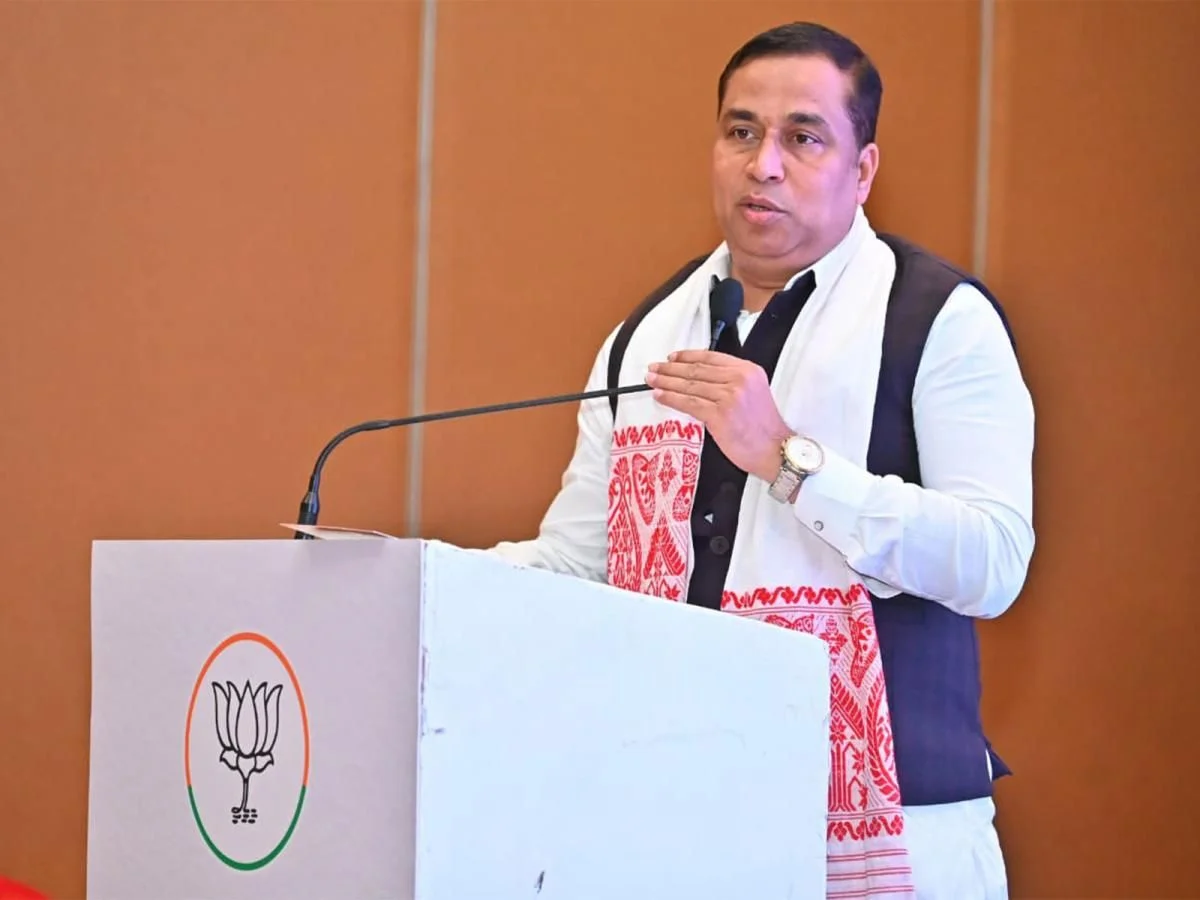
The Assam State BJP organized an extensive pre-budget discussion in Guwahati on Wednesday. During the conference, Assam Finance Minister Jayanta Mallabaruah and State BJP President Dilip Saikia stated that the local economy achieved an unprecedented transformation between the fiscal years 2014-15 and 2024-25, demonstrating an impressive path of development, stability, and wealth.
Under the forward-thinking guidance of Chief Minister Dr. Himanta Biswa Sarma, the state accelerated its financial advancements. The administration successfully met the public’s core expectations and demands, building a robust framework for a stronger local economy, according to Dilip Saikia.
Delivering the opening statement at the Pre-Budget Consultation held by the party in Guwahati, Dilip Saikia noted that Assam is advancing steadily toward becoming a top-performing Indian state. This progress remains fueled by the Chief Minister’s strategic vision and relentless focus on comprehensive state development.
He further pointed out that the economic recovery of the state plays a critical role in executing Prime Minister Narendra Modi’s overarching goal of a Viksit Bharat.
Presenting the keynote address, Assam Finance Minister Jayanta Mallabaruah stated that creating a practical, citizen-first, and growth-driven budget relies heavily on incorporating wise ideas and feedback provided by industry experts across multiple fields.
He highlighted that under the proactive administration of Dr. Himanta Biswa Sarma, the overall execution rate of approved budget funds reached an impressive 90%. The government remains completely dedicated to ensuring total and efficient implementation of all state resources.
The Finance Minister also mentioned that Assam currently receives historic levels of focus and care from the Union Government. Moving past old historical viewpoints, the central leadership no longer observes the northeastern state as a distant or secondary territory.
The fact that Prime Minister Narendra Modi traveled to Assam more than 35 times serves as undeniable proof of the state’s ascending geopolitical importance and high profile on the national map, Jayanta Mallabaruah stated.
Reflecting on the dramatic shifts in the local marketplace, State Finance Minister Jayanta Mallabaruah observed that the region previously faced times when securing even Rs 1 crore to Rs 2 crore in private backing was incredibly difficult.
Today, however, the state successfully attracted serious corporate interest and investment pitches crossing Rs 5 lakh crore. Pointing to the rapidly expanding industrial sector, he revealed that following the launch of an initial semiconductor production facility, 2 additional semiconductor projects will set up operations locally, turning the state into a rising center for venture capital, technology, and high-tech manufacturing.
During the feedback round, multiple prominent figures offered essential policy proposals. Abhijit Baruah, Managing Director of Assam Air Products, pushed for stronger financial backing for the MSME sector to increase state revenues and foster long-term commercial advancement.
He additionally advocated for the implementation of a specialized manufacturing initiative modeled directly after the central government’s prominent national industrial program.
Furthermore, he advised making the inclusion of indigenous bamboo and cane materials a strict requirement for state-backed building infrastructure, which would directly boost local resource markets and ecological conservation.
Prof. Ramesh Chandra Deka, Vice-Chancellor of Cotton University, called upon state officials to allocate larger capital amounts toward modernizing campus facilities and upgrading the school’s overall educational system.
Akashjyoti Gogoi, Managing Director of the commercial egg supplier Bahubali, recommended introducing specialized insurance subsidies to protect smaller poultry operations and egg farms, increasing their overall market durability and commercial position.
The assembly brought together an esteemed group of financial specialists, professors, writers, business innovators, corporate executives, athletic officials, and delegates representing various commercial organizations, including vice-chancellors from 5 local universities and principals from 15 separate colleges.
Major regional banking and development corporations, such as NABARD, the Indian Institute of Entrepreneurship, and NEDFi, also sent high-level delegates to participate.
The list of notable attendees featured Abhijit Baruah, Managing Director of Assam Air Products; Akashjyoti Gogoi, Managing Director of Bahubali; Dr. Nomal Chandra Bora, Managing Director of GNRC; Selim Raja Mondal, General Manager of ATPO; respected educator Dayananda Burhagohain; Ranjiv Sharma, Chairman of Sitajakhala; and Subodh Mallabaruah.
Partha Pratim Pathak, Vice-President of the Assam Olympic Association; Laghu Udyog Bharati President Chandra Shekhar Sharma; financial specialist Bikash Agarwala; ONGC representative Chandra Shekhar Sharma; corporate head Mriganka Das; and celebrated textile expert Sanjukta Dutta, alongside many other notable individuals, provided practical inputs during the gathering.
The strategic meeting also included Cabinet Ministers Rameswar Teli, Ashok Singhal, Ajanta Neog, Biswajit Daimary, Bimal Bora, Kaushik Rai, and Nilima Devi, alongside Member of Parliament Bijuli Kalita Medhi.
Future Outlook
The extensive list of capital proposals gathered during this consultative session signals a dramatic shift in how industrial groups view the region. Moving toward 2026 and beyond, the expected addition of 2 more semiconductor facilities will likely transform the local labor market, moving it away from traditional agricultural dependencies and toward high-tech electronics manufacturing. This industrial push, combined with a sustained 90% budget execution efficiency, sets up the state to play an expanding role in India’s broader domestic supply chain goals.
FAQs
What was the main objective of the Guwahati meeting?
The main goal of the assembly was to host a pre-budget discussion to collect practical policy suggestions, development insights, and economic feedback from diverse industry leaders to shape the state’s upcoming financial budget.
What is the current budget implementation rate in Assam?
Under the administration of Chief Minister Dr. Himanta Biswa Sarma, the state has achieved an impressive budget utilization and execution rate of 90%.
How much investment has Assam attracted recently?
The state has successfully secured industrial investment proposals and business commitments valued at more than Rs 5 lakh crore.
How many semiconductor units are planned for the state?
Following the initial setup of a semiconductor manufacturing facility, the state expects to welcome 2 more semiconductor units to boost its high-tech industrial manufacturing ecosystem.