Supreme Signs NYC Licensing Deal Through 2028
Supreme, through Chapter 4 Corp., has signed a non-exclusive agreement with New York City’s marketing organization, NYC Tourism + Conventions, allowing the brand to use official NYPD, FDNY, Sanitation and Made in NY trademarks on clothing and accessories through 2028.
The agreement, disclosed in a municipal procurement notice published in late September or early October 2026, establishes a $22,000 guaranteed minimum royalty alongside a 6% royalty on net sales of licensed merchandise.
New York City also holds an option to extend the arrangement through December 31, 2030.
The deal attracted attention in November as Supreme’s municipal-themed products entered its Fall/Winter 2026 collection, connecting an existing city licensing arrangement with the brand’s commercial apparel releases.
NYC Licensing Agreement and Parties
Chapter 4 Corp. is the contracting entity behind Supreme’s licensed merchandise.
The agreement involves NYC Tourism + Conventions, New York City’s destination marketing organization, working in coordination with the Department of Small Business Services (SBS).
The arrangement permits Supreme to incorporate designated government-owned trademarks into commercial apparel and accessories while municipal ownership of those marks remains with New York City.
The non-exclusive agreement allows New York City to license the same trademarks to other commercial partners without transferring ownership to Supreme.
NYC Tourism + Conventions administers the licensing relationship through the city’s established trademark program. SBS participates in the municipal oversight framework associated with the agreement.
The arrangement identifies Supreme’s corporate entity as the commercial licensee rather than establishing separate merchandise agreements with the police, fire and sanitation departments.
That structure is important because several government agencies’ insignia are involved, but the commercial authorization is handled through the city’s broader trademark licensing system.
The arrangement also differs from a conventional fashion collaboration involving two private brands. New York City retains control of government-owned intellectual property while permitting its use on products developed and sold by a commercial clothing company.
Official Trademarks Covered by Agreement
The agreement covers registered municipal service marks associated with the New York City Police Department, Fire Department of the City of New York, Department of Sanitation and the official Made in NY identity.
The NYPD and FDNY insignia are among the city’s most recognizable public-service symbols. Their inclusion allows Supreme to incorporate imagery associated with New York’s emergency services into its streetwear collections.
The Department of Sanitation branding provides another design category, representing municipal services associated with waste collection and street cleanliness.
Unlike the individual agency marks, Made in NY represents a broader city identity rather than a particular public-service department.
The four categories of licensed marks give Supreme scope to produce different municipal-themed apparel and accessories.
Each category also carries a distinct association with New York City. Police and fire department symbols represent emergency services, sanitation branding reflects the city’s municipal workforce, and Made in NY connects merchandise with the city’s wider identity.
The agreement covers commercial reproduction of designated trademarks, not ownership of the symbols themselves. Supreme’s clothing remains consumer merchandise, even when a product incorporates an official government insignia.
The licensing distinction is particularly relevant for designs involving police and fire department marks, which normally appear in contexts associated with public agencies.
Contract Duration and Extension Rights
The agreement was executed in September 2026, with its initial licensed operating period scheduled to continue through December 31, 2028.
The contract also includes a municipal option to extend the partnership through December 31, 2030.
The additional two-year period is discretionary. New York City must exercise the extension option for the agreement to continue beyond the initial term.
The contract entered the municipal procurement record in late September or early October. November reporting subsequently connected its financial terms with Supreme’s seasonal merchandise entering retail distribution.
This sequence separates the execution of the agreement from the later public attention surrounding its products.
The timing is relevant because Supreme’s Fall/Winter merchandise releases were associated with a licensing arrangement already established earlier in the year, rather than a new contract executed in November.
The extension provision also leaves a future decision with the city. Whether the commercial relationship continues through 2030 depends on the municipality exercising its contractual option.
Royalty Payments and Financial Terms
The agreement establishes two financial components: a guaranteed minimum royalty and a percentage-based royalty calculated on licensed merchandise sales.
The $22,000 guaranteed minimum establishes a contractual payment baseline for Supreme’s authorized commercial use of New York City’s trademarks.
The 6% royalty links compensation to net sales generated by merchandise carrying the covered marks.
The 6% royalty applies to net sales, not Supreme’s profits.
The disclosed terms do not establish the final revenue New York City will receive from the arrangement.
Actual royalty proceeds depend on sales of licensed merchandise and the contractual treatment of payments under the guaranteed minimum and percentage-based provisions.
The city’s eventual receipts therefore cannot be calculated from the announced terms alone. The available figures establish the payment structure but do not provide completed sales results.
The $22,000 minimum should not be interpreted as the total economic value of the partnership. The percentage-based provision creates a connection between licensing compensation and merchandise sales throughout the applicable contractual period.
The financial arrangement is significant because it turns the authorized commercial use of public-service insignia into a defined contractual revenue relationship.
New York City can receive compensation for use of its registered marks while Supreme develops merchandise featuring those symbols for its retail customers.
Licensed Merchandise and Retail Availability
Supreme’s 2026 products illustrate how the licensing agreement translates into commercially available clothing and accessories.
One identified release is a DSNY zip-up hoodie priced at $188, incorporating Department of Sanitation branding into Supreme’s apparel range.
The hoodie places a municipal identity associated with street cleaning and waste collection on a consumer fashion product.
The Fall/Winter 2026 collection also includes FDNY-themed athletic jerseys.
These garments incorporate fire department imagery into sports-inspired clothing, establishing a different merchandise format from the sanitation-themed hoodie.
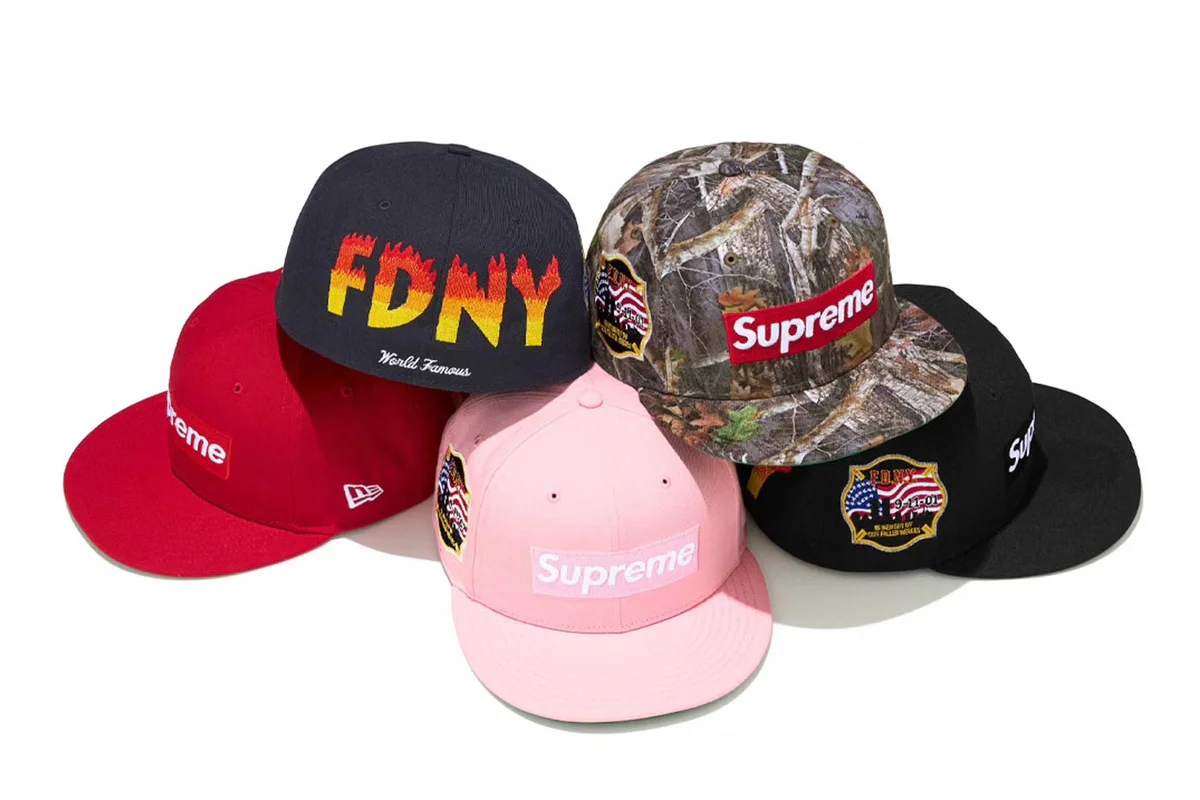
Another identified release is an embroidered FDNY baseball cap priced at $58.
The cap brings the licensed insignia into Supreme’s headwear category, extending the product range beyond larger apparel items.
The reported 2026 releases included DSNY hoodies, FDNY caps and FDNY-themed athletic jerseys, although current store-by-store availability was not established.
The merchandise entered Supreme’s retail distribution pipeline during 2026, moving the licensing arrangement from a contractual authorization into consumer products.
These releases provide evidence of commercial use of the licensed marks. They also connect the city’s trademark arrangements directly with Supreme’s seasonal collections.
The available reporting identifies retail products and their announced prices but does not establish present inventory quantities or a confirmed restock schedule.
Consequently, the identified merchandise and original prices do not guarantee that the same items remain available for immediate purchase.
The distribution information also does not establish a separate city-operated retail channel for the clothing. The products are presented as Supreme merchandise using authorized municipal imagery.
The distinction matters for customers seeking official designs because the agreement concerns trademark licensing rather than the sale of departmental uniforms or equipment through government agencies.
Product Design and Municipal Oversight
Supreme’s licensed products combine the company’s established streetwear identity with official symbols associated with New York City public services.
The DSNY hoodie incorporates sanitation branding, while the FDNY jerseys and caps use imagery connected to the fire department.
These designs demonstrate how government-owned marks can be incorporated into several fashion categories under a commercial licensing agreement.
Detailed design approval and manufacturing oversight requirements have not been publicly specified.
The disclosed agreement establishes permission to reproduce the protected marks but does not identify separate approval procedures for individual garments.
The public information also does not establish that New York City’s police, fire or sanitation departments manufacture Supreme’s merchandise.
This leaves a clear distinction between the municipal ownership of the licensed insignia and the commercial production of apparel carrying those symbols.
The city remains the trademark owner, while Supreme is the business using the authorized marks in its products.
For the municipal licensing program, the arrangement provides a contractual basis for approving commercial uses of public-service imagery that would otherwise raise questions about trademark authorization.
City Spokesperson Confirms Licensing Approach
Alyssa Schmid, a spokesperson for NYC Tourism + Conventions, confirmed the organization’s support for commercial partnerships involving New York City trademarks.
Schmid said the organization “welcomes] partnerships with brands who want to support New York City trademarks.”
Her statement places Supreme’s arrangement within the organization’s broader approach to licensing city-owned intellectual property.
Other established consumer brands, including Nike and J.Crew, have participated in licensing relationships involving New York City trademarks.
Their involvement demonstrates that Supreme is joining an existing municipal licensing program rather than participating in an entirely new category of city agreement.
Supreme’s participation has particular relevance because of the label’s New York origins and established position in streetwear.
The brand has previously used imagery associated with the city’s municipal services, making official access to those marks a development connected with its existing design approach.
The agreement also places Supreme alongside other commercial businesses that have obtained permission to incorporate municipal identity into consumer merchandise.
Unlike unauthorized reproductions of government insignia, the licensed products operate within a formal commercial relationship with the city.
Trademark Enforcement and Legal Context
New York City’s licensing program has a legal background involving federal trademark protection and enforcement against unauthorized commercial use.
The city obtained federal registration for the FDNY mark on December 12, 2001, establishing a trademark record for one of the symbols covered by Supreme’s agreement.
Federal registration provides relevant context for the city’s ability to control commercial reproduction of that insignia.
New York City has also pursued litigation involving clothing and other merchandise displaying municipal public-service symbols.
One relevant case is City of New York v. Blue Rage, Inc., a federal trademark dispute involving commercial use of police and fire department imagery.
The litigation forms part of the city’s history of asserting intellectual property rights under the federal Lanham Act.
Its relevance to Supreme’s agreement lies in the difference between authorized commercial merchandise and products using protected marks without permission.
A city’s insignia can be widely recognized by the public while still receiving trademark protection against unauthorized commercial reproduction.
The Blue Rage litigation illustrates why the city’s trademark protections matter: unauthorized commercial reproduction can lead to federal enforcement, while licensing provides a lawful route for commercial use.