India Shapewear Market to Hit $1.2 Billion by 2030
India’s shapewear market is undergoing a structural transformation, shifting from a niche occasion-wear product into a daily wardrobe essential. Driven by evolving consumer mindsets, rising disposable incomes, and advanced fabric engineering, the sector is currently expanding at a rapid pace across both metropolitan and tier-II urban centers.
Key Highlights
- The Indian shapewear market is valued at $650-750 million in 2025 and is projected to exceed $1.2 billion by the early 2030s.
- Consumer demand is shifting from restrictive body correction to comfort-led fashion enhancement and everyday support.
- The market is expanding at a compound annual growth rate (CAGR) of 8-10%, outpacing traditional innerwear segments.
- E-commerce, quick commerce, and influencer marketing are driving major adoption in Tier II and Tier III cities.
India’s shapewear market is shedding its old skin. What was once tucked away as a special-occasion purchase—brought out for weddings, cocktail parties and body-hugging outfits—is now finding a permanent place in everyday wardrobes. Driven by changing attitudes towards body image, rising fashion consciousness and a growing preference for comfort-led dressing, shapewear is evolving from a corrective garment into a confidence-enhancing essential.
Industry estimates peg the Indian shapewear market at around USD 650-750 million (Rs 5,500-6,300 crore) in 2025, with forecasts suggesting it could surpass USD 1.2 billion (Rs 10,000 crore) by the early 2030s, expanding at a compound annual growth rate (CAGR) of 8-10%. The category is outpacing several mature innerwear segments as consumers embrace premium intimate wear solutions and experiment with diverse fashion choices.
Rising disposable incomes, growing female workforce participation, increasing fashion consciousness and the rapid penetration of e-commerce platforms are fuelling demand across metros as well as emerging Tier II and Tier III markets.
The shift reflects broader changes in consumer attitudes. Body positivity, inclusivity and self-expression are replacing traditional notions of “body correction”, while advances in fabrics and garment engineering are making shapewear significantly more comfortable than previous generations.
As a result, brands across the intimate wear spectrum are repositioning shapewear not as a tool to alter the body, but as a foundation garment that enhances how clothes fit and how consumers feel.
The End of the Corset Era
For decades, shapewear was associated with discomfort and unrealistic beauty ideals. That perception is rapidly fading.
According to Arpana Jathanna Walters, Chief Design Officer – Enamor & Slimz, Modenik Lifestyle, today’s shapewear is designed around support rather than restriction. “Gone are the days of squeezing into unforgiving corsets just to mimic an hourglass figure. Today’s shapewear is smarter, softer, and far more inclusive – designed not just to flatter but to support. It’s no longer about transforming your shape; it’s about enhancing your style.”
She notes that style today is increasingly about embracing one’s individuality. “For some, that means embracing shapewear—not to hide who they are, but to smooth out the edges, hold in the jiggle, and let their outfits shine. The new generation of shapewear isn’t about restriction. It’s about empowerment.”
The industry’s messaging is now centred on confidence rather than correction. “Shapewear isn’t about hiding – it’s about highlighting. It’s a subtle way to make your clothes drape better, sit smoother, and feel more flattering.”
Fashion Trends Are Creating New Demand
The rise of social media, online fashion platforms and influencer culture has dramatically altered how consumers shop and dress.
According to Yash Goyal, Co-founder and CEO, Krvvy, the growth of digital-first fashion has played a major role in reshaping the category. “Consumers today view shapewear less as a tool for body correction and more as a solution that enhances comfort, confidence, and outfit versatility.”
He points to the growing fusion of Indian and Western fashion as a significant catalyst. “The increasing fusion of Indian and Western wear—from contemporary saree styling and Indo-western outfits to body-skimming dresses and co-ord sets—has created diverse wardrobe needs. As consumers experiment more with fashion, they are also realising that different outfits require different innerwear and shapewear solutions.”
The result has been increased awareness around what industry executives refer to as “foundation wear” — garments worn underneath clothing to improve fit, comfort and appearance.
Social media creators, fashion influencers and online communities have accelerated this education process, helping consumers understand which shapewear solutions work best for different outfits and occasions.
From Occasion Wear to Everyday Essential
One of the most significant shifts in the category is the move from occasional use to daily wear.
Soumya Kant, Co-Founder and Chief Growth Officer, Clovia, says consumers increasingly expect shapewear to deliver both comfort and functionality.
“Over the last two years, usage has moved from being largely occasion-led to more everyday applicability. Consumers are increasingly prioritising comfort alongside functionality, seeking solutions that offer support without feeling restrictive.”
She adds that evolving conversations around body confidence have helped normalise shapewear. “Digital content and evolving conversations around body confidence have helped normalise shapewear as an essential layering piece rather than a niche product.”
Similarly, Nihal Rajan, CMO, Jockey India, believes the category has crossed an important threshold. “Shapewear has progressively evolved from a niche category into an everyday wardrobe essential. Consumers today are focusing on personal style and seeking innerwear that makes them feel confident and comfortable, broadening the appeal of the category considerably.”
The popularity of fitted silhouettes, occasion wear and contemporary fashion has further increased demand for seamless, invisible and lightweight shapewear solutions.
The New Consumer: Confidence Over Correction
Perhaps the most notable development is the emergence of a consumer who sees shapewear as a styling tool rather than a corrective garment.
Vimarsh Razdan, Co-founder and CEO, Underneat, says the category is experiencing a meaningful shift in consumer perception.
“Consumers today are moving away from the idea of shapewear as a tool to alter their bodies and are increasingly embracing it as a solution that helps clothing fit better, enhances comfort, and boosts confidence.”
He attributes the change to evolving body positivity conversations, increased fashion awareness and greater accessibility through online commerce. “The future of shapewear is not about changing how women look, it is about helping them feel supported, comfortable, and confident in their own skin. Brands that focus on solving real consumer needs with empathy, innovation, and inclusivity will be best positioned to shape the next phase of growth in this category.”
A similar sentiment is echoed by Maadhav Saxena, Founder of Invogue. “Earlier, shapewear was often viewed as a product meant only for curvier women or as something that was used to ‘fix’ a body. Today, that perception is changing rapidly.”
He says consumers across body types are increasingly using shapewear as a confidence-enhancing styling garment. “The conversation has moved from hiding flaws to accentuating natural shape, improving outfit fit and feeling more confident in what you’re wearing.”
Innovation Is Reshaping the Category
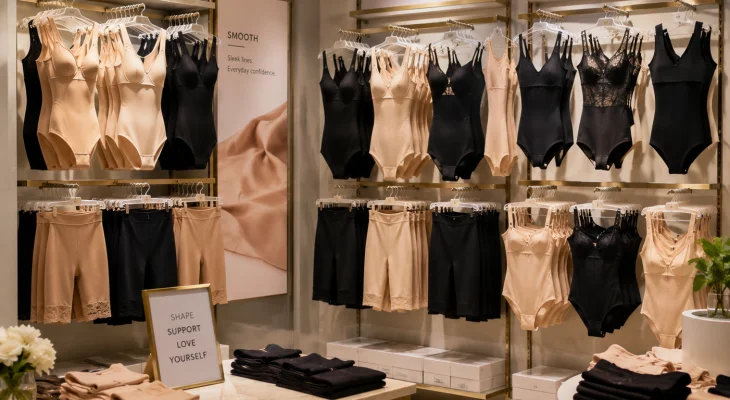
Product innovation remains one of the strongest growth drivers in shapewear. Modern products bear little resemblance to the restrictive garments of previous decades. Brands are increasingly investing in lightweight fabrics, seamless construction, breathable materials and targeted compression technologies.
According to Walters, consumers now have access to a broad range of specialised products which include tummy tucker briefs for light waist support, Waist-cinching corsets for enhanced shaping, High-waist briefs and thigh shapers, Back-smoothing camisoles, Full-body slips and shaping teddies, Multiple compression levels ranging from light to firm. Fabric innovations including engineered lace, cooling polyamides and seamless knits.
“With ultra-light, seamless fabrics and no-pinch technology, today’s shapewear feels like second skin. Engineered with smart compression and flexible panels, it lifts, smooths, and supports—while letting you move freely and comfortably.”
Tier II and Tier III Markets Emerge as Growth Engines
While metropolitan cities remain the largest markets, industry executives believe the next phase of expansion will come from smaller cities.
According to Goyal, increasing access to online fashion, influencer content and e-commerce is encouraging consumers in Tier II and Tier III markets to experiment with new styles.
“The adoption of occasion wear, fusion fashion, and body-skimming silhouettes is creating a growing need for shapewear solutions.”
Underneat’s Razdan also expects strong growth beyond major urban centres as awareness and accessibility improve through digital channels.
Jockey’s Rajan identifies Gen Z consumers, working professionals and shoppers in smaller cities as key demand drivers.
“We see strong growth coming from Gen Z consumers, working professionals and shoppers in Tier II and Tier III cities who are increasingly seeking comfort-led, versatile solutions for everyday wear and not just special occasions.”
Omnichannel Retail and Quick Commerce Gain Ground
The way shapewear is sold is also evolving. While online platforms continue to drive discovery and education, physical retail remains important because fit and comfort are highly personal considerations.
Clovia’s Kant notes that direct-to-consumer channels remain valuable for consumer insights and product development, while marketplaces help scale awareness. “Offline remains critical to driving trial and trust, given the category’s fit-sensitive nature.”
At the same time, quick commerce is emerging as a potentially disruptive channel. Goyal believes it reflects growing demand for instant solutions, while Saxena sees particular relevance for last-minute fashion needs.
“Someone may be travelling, attending an event, going to a party or wearing a specific outfit and realise they need the right foundation garment at the last minute. As quick-commerce infrastructure expands, it has the potential to become an important channel for certain shapewear and fashion-accessory categories where convenience and speed are critical purchase drivers.”
Future Outlook
The landscape of Indian intimate wear is poised for sustained diversification as foundation wear integrates into mainstream fashion. As body-positive messaging aligns with technical textiles, domestic and international brands are projected to increase their capital investment in localized designs. This evolution will likely solidify shapewear as a baseline utility product rather than a luxury garment, reshaping the consumer electronics-like rapid life cycle of modern apparel retail.
FAQs
What is the projected size of India’s shapewear market?
The Indian shapewear market is estimated at $650-750 million in 2025 and is projected to cross $1.2 billion by the early 2030s, growing at a CAGR of 8-10%.
Why is shapewear transitioning into an everyday wardrobe essential?
Advancements in fabric technology, lightweight seamless construction, and a shift from body restriction to comfort-led support have made modern shapewear suitable for daily wear.
Which consumer segments are driving growth in Tier II and Tier III cities?
Growth in smaller Indian cities is primarily propelled by Gen Z consumers, corporate professionals, and fashion-conscious shoppers experimenting with fusion and western silhouettes.
How is quick commerce impacting the shapewear retail market?
Quick commerce platforms are emerging as a disruptive channel by serving immediate, last-minute consumer needs for fashion foundation garments during events or travel.