California’s Fifth Climate Assessment projects hotter, drier future for SoCal
Key Takeaway: California’s Fifth Climate Change Assessment, released 19 October 2026, projects 3.5 to 4.3 degrees Fahrenheit of warming by 2050, up to three-quarters of beaches disappearing, and 5,000+ extra wildfire-smoke deaths a year by mid-century.
California released its landmark Fifth Climate Change Assessment on Monday, 19 October 2026, projecting that Southern California faces a significantly hotter, drier and more volatile future over the coming decades, Secret Los Angeles reported.
Average temperatures are expected to climb by 3.5 to 4.3 degrees Fahrenheit by 2050, while the Sierra snowpack could shrink by about 40% by mid-century. Between 24% and 75% of the state’s beaches could disappear seasonally or permanently, with the worst losses in developed Southern California, CBS News Los Angeles reported. The projections span several emissions pathways, and the most extreme trajectory is described as an unlikely outcome.
SoCal’s 2050 outlook
Coastal Southern California faces particular vulnerability. End-of-century projections from the Union of Concerned Scientists blog put warming at 5.7 to 8.0 degrees Fahrenheit, with sea-level rise of 0.8 feet by mid-century climbing to 3.3 feet by 2100. Also flagged: weather whiplash, meaning rapid swings between wet and dry extremes, plus longer heat waves.
The assessment notes the Palisades and Eaton fires became the most expensive wildfire disaster on record, with $250 billion+ in losses and 16,000+ structures destroyed.
“It’s really, for me, about being clear-eyed about the future, so we can make decisions today for the future that we want to create,” “This intermediate scenario is still within reach,” “Every inch that we are mitigating in terms of climate emissions is hugely important.”
Abby Edwards, Senior Deputy Director of the Governor’s Office of Land Use and Climate Innovation, to CBS News Los Angeles
Fire, smoke and compounding hazards
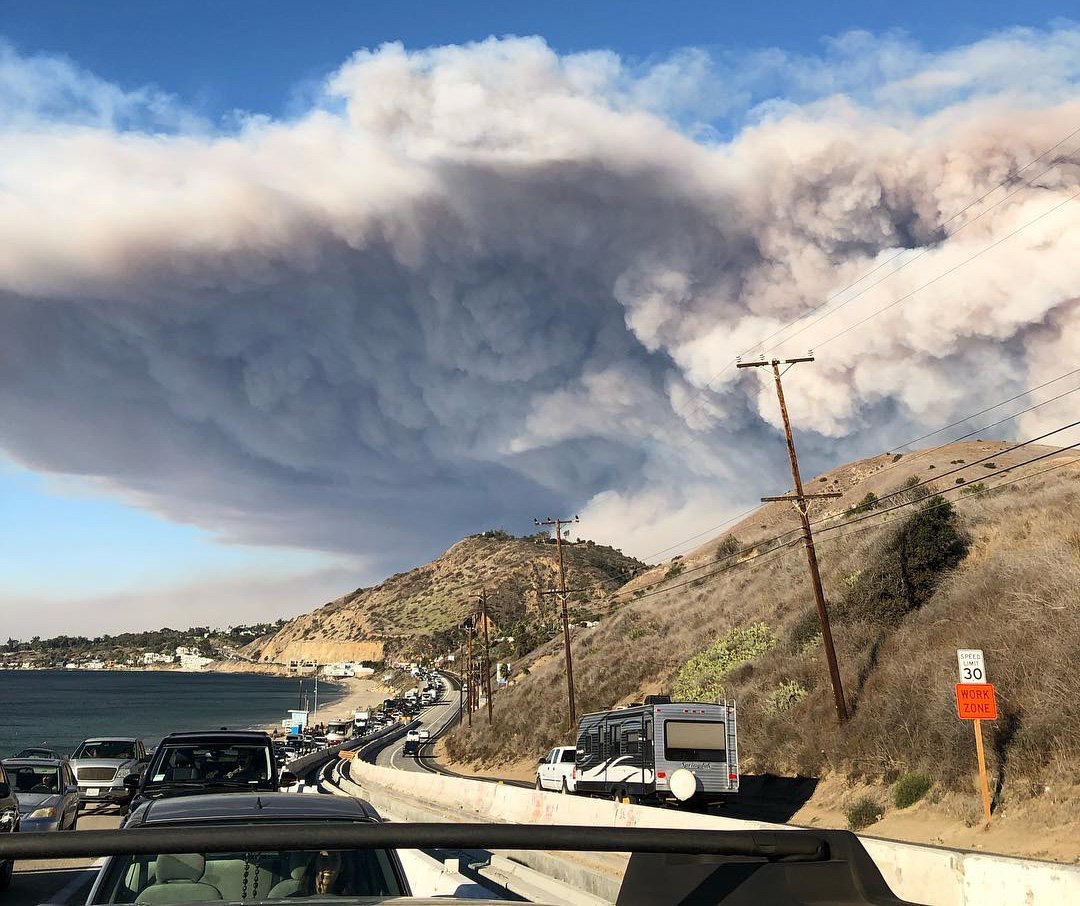
Humans started roughly two-thirds of California wildfires over the last 30 years, but climate change is worsening them through drier vegetation and extended fire seasons. The assessment projects wildfire smoke will cause more than 5,000 extra deaths per year by 2050, the largest increase of any US state.
The report’s lead editor stressed that climate hazards no longer occur in isolation: post-wildfire flooding and cascading events magnify individual impacts.
“What we know, by and large, is the state is going to get hotter,” “There are going to be more wildfires and droughts and variations in precipitation. All of this is coming to us.” “We are used to thinking of hazards as standalone, so we worry about wildfires, but we don’t worry about what can happen if there is wildlife and then there is flooding,” “So, this compounding, in a way, kind of magnifies the impact of individual events.”
Pramod Khargonekar, lead editor of the assessment, to CBS News Los Angeles
Regional detail and the summit
Regional analyses released alongside the main report underscore local impacts. According to UC Santa Cruz News, Central Coast findings point to hotter days, intense storm bursts and a 24% sea-level increase in Monterey, prompting the rollout of the CoSMoS Adapts planning tool.
To address the findings, officials convened the first-ever Resilient California Summit in Sacramento the same week: a three-day event with more than 1,000 attendees, including tribal leaders, municipal representatives and state authorities.
“There is a lot of adaptation going on,”
Ruth Langridge, coordinating lead author of the Central Coast report, to UC Santa Cruz News
Key Story Metrics
| Figure | Reported Status |
|---|---|
| 3.5-4.3 degF by 2050 | Projected warming (Secret LA / CBS LA) |
| ~40% by mid-century | Sierra snowpack loss (Secret LA / CBS LA) |
| 24-75% | Beaches disappearing seasonally or permanently, worst in developed SoCal (Secret LA / CBS LA) |
| 5,000+/year by 2050 | Extra wildfire-smoke deaths, largest increase of any US state (Secret LA / CBS LA) |
| ~2/3 | Share of CA wildfires started by humans over the last 30 years (Secret LA / CBS LA) |
| 5.7-8.0 degF | End-of-century warming (UCS) |
| ~60% | End-of-century snowpack loss (UCS) |
| 0.8 ft / 3.3 ft | Sea-level rise by mid-century / by 2100 (UCS) |
| $250bn+ / 16,000+ | Palisades and Eaton fires: losses / structures destroyed (UCS) |
| 1,000+ attendees | First Resilient California Summit, Sacramento, 3 days (Secret LA / CBS LA) |
✓ Verified
Verified: California released its Fifth Climate Change Assessment on 19 October 2026. Headline projections: 3.5-4.3 degF warming by 2050; ~40% snowpack loss by mid-century; 24-75% of beaches disappearing; 5,000+ extra wildfire-smoke deaths/year by 2050; ~two-thirds of CA fires human-started over 30 years. Worst-case scenario described as unlikely; intermediate scenario within reach.
⚠ Still needs confirmation
End-of-century figures (5.7-8.0 degF, 60% snowpack loss, 3.3 ft sea rise) and the $250bn+ loss figure come from the UCS blog’s reading of the assessment; regional details from UCSC News. Projections depend on emissions scenarios and are not observed outcomes.
Frequently Asked Questions
What is California’s Fifth Climate Change Assessment?
A comprehensive scientific evaluation commissioned by the state to measure and forecast localised risks from temperature, wildfire, drought and sea-level rise.
What are the headline SoCal findings?
3.5-4.3 degF warming by 2050, ~40% snowpack loss, 24-75% of beaches disappearing, and 5,000+ extra wildfire-smoke deaths per year by 2050.
Is the worst case likely?
No. The assessment models several emissions scenarios and describes its worst-case outcome as unlikely; the intermediate scenario is described as still within reach.
What was the Resilient California Summit?
A first-ever three-day event in Sacramento the same week, with 1,000+ attendees including tribal leaders, to align climate strategy with the assessment’s data.
- Secret Los Angeles (Natalia Alvarez, 20 Oct 2026): California’s Fifth Climate Change Assessment
- CBS News Los Angeles (Gio Insignares, 19 Oct 2026): California climate change assessment
- Union of Concerned Scientists blog (Angel S. Fernandez-Bou, 19 Oct 2026): How will California be shaped by climate change
- UC Santa Cruz News (Emily Cerf, 19 Oct 2026): Central Coast report
Editor’s note: Projections are from the Fifth Climate Change Assessment, based on coverage available up to 20 October 2026; they depend on emissions scenarios and are not observed outcomes.