India Must Build Deep Tech and Domestic Innovation Ecosystem
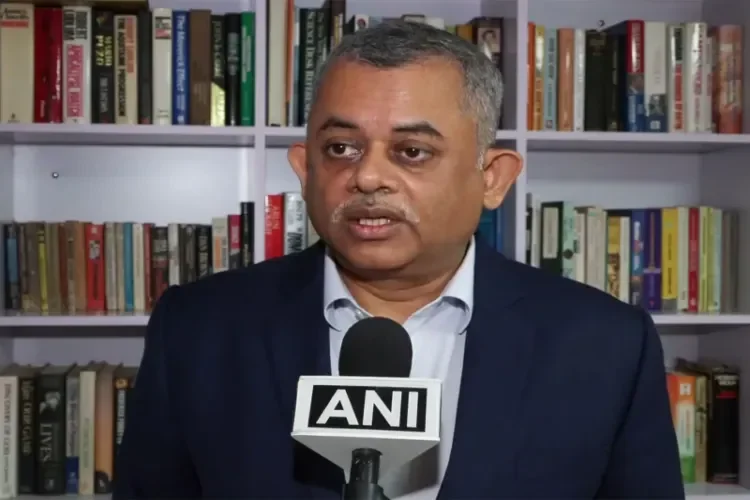
India must urgently accelerate its domestic innovation ecosystem, invest heavily in deep technology, and create globally competitive products across key sectors rather than depending solely on international trends and foreign technologies, economist Neelkanth Mishra said on Saturday.
Key Highlights
- India needs to build its own technological capabilities to escape the middle-income trap.
- Relying indefinitely on external technological advances poses a structural risk to long-term growth.
- The Unique Identification Authority of India (UIDAI) Chairman urged youth to embrace risk-taking.
- IIT Gandhinagar conferred 734 degrees during its 15th convocation ceremony.
India needs to strengthen its domestic innovation ecosystem, invest heavily in deep technology, and create globally competitive products across key sectors rather than depending solely on international trends and foreign technologies, economist Neelkanth Mishra said on Saturday.
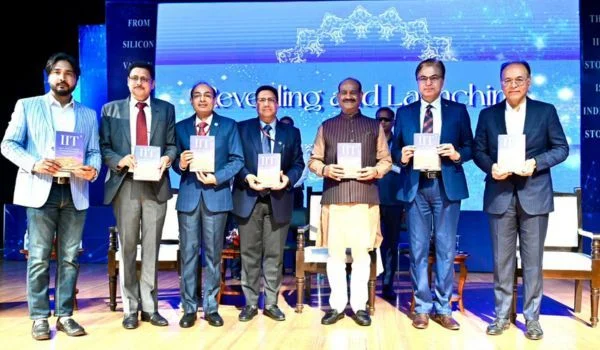
Speaking at the 15th convocation ceremony of Indian Institute of Technology Gandhinagar, Mishra highlighted the opportunities and challenges facing the Indian economy, including the need to avoid the middle-income trap and transition into a technology-driven and product-focused nation.
Mishra, who serves as Chief Economist at Axis Bank and Chairman of the Unique Identification Authority of India, said India must develop its own technological capabilities and innovation framework to remain competitive in the global economy.
According to an official release, he stressed that the country cannot rely indefinitely on external technological advances and must instead nurture indigenous research, deep-tech expertise and product development across strategic industries.
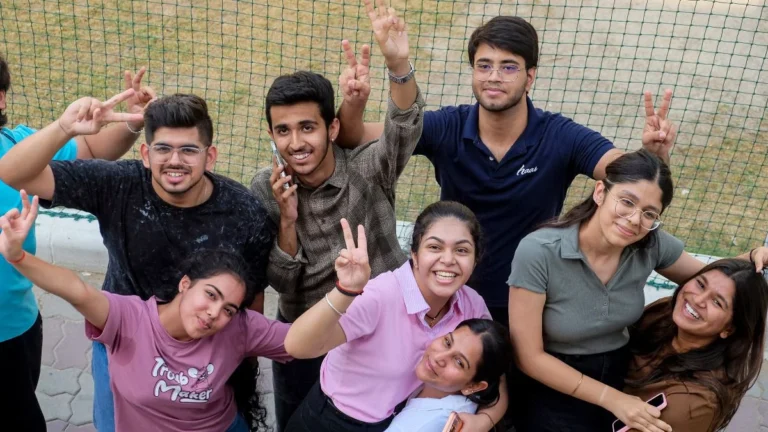
Addressing the graduating students, Mishra said India’s future would be shaped not only by policymakers and economists but also by the decisions and ambitions of the younger generation. He encouraged graduates to embrace risk-taking, pursue technological excellence and contribute towards building a self-reliant and globally competitive India.
The convocation ceremony was attended virtually by Pai-Chi Li, President of the Asian Institute of Technology, who was the guest of honour. Another guest of honour, L N Dorairajan, presided over the event.
A total of 733 students graduated during the ceremony, while 734 degrees were conferred across undergraduate, postgraduate and doctoral programmes. The graduating cohort included 225 women and 508 men from India, Mauritius and Nepal. The institute also awarded 107 PhD degrees.
READ MORE:Trailblazing Naheed Muqueetulla reinvents Indian denim through Urbano
A day earlier, IIT Gandhinagar held its annual awards ceremony, recognising students for achievements in academics, research, innovation, entrepreneurship, leadership, sports, arts, culture and community service.
Future Outlook
As India aims to transition from a service-driven economy to a technology-first global power, structural changes in domestic research and development are vital. Experts project that institutional investments into indigenous deep-tech frameworks will determine how effectively the country avoids economic stagnation. Nurturing public-private research partnerships will remain central to driving real-world product engineering over the next decade.
FAQs
What did Neelkanth Mishra emphasize regarding India’s technology sector?
Neelkanth Mishra highlighted that India must build an independent, robust domestic innovation ecosystem and scale deep technology investments instead of relying on external global trends and foreign intellectual property.
How many degrees were awarded at the 15th IIT Gandhinagar convocation?
IIT Gandhinagar conferred a total of 734 degrees to 733 graduating students, including 107 PhD qualifications and representations from international students.
Who attended the IIT Gandhinagar convocation as guests of honour?
The convocation featured the virtual attendance of Pai-Chi Li, President of the Asian Institute of Technology, alongside L N Dorairajan, who presided over the institutional event.