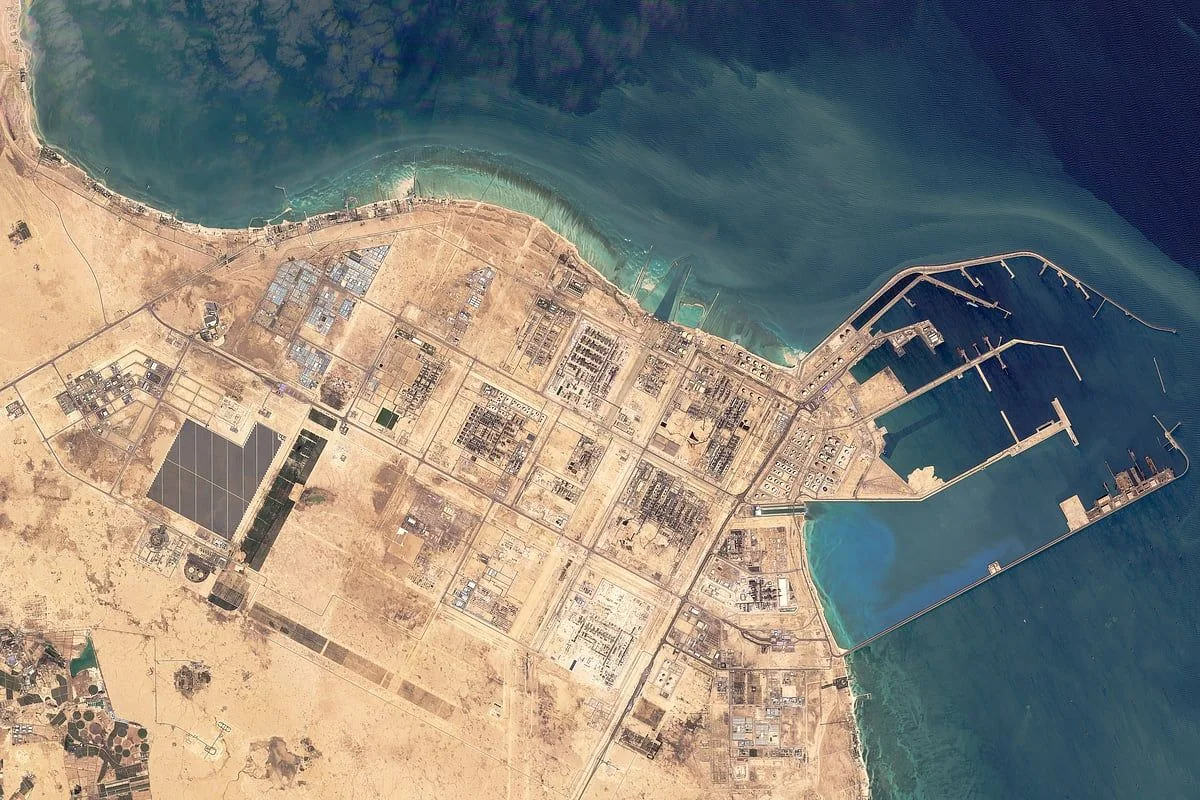
Qatar Gas Plant Blast Kills 12 Indians
A devastating technical explosion at the Barzan gas facility within Qatar’s Ras Laffan Industrial City has killed 13 people, including 12 Indian nationals, and injured 66 others during a operational restart, though energy officials confirm domestic supplies and global hydrocarbon exports remain completely unaffected.
Key Highlights
- A technical malfunction triggered a fatal blast and subsequent fire at the Barzan gas facility on Sunday evening.
- The Indian Embassy in Doha confirmed 12 Indian fatalities and one Pakistani casualty, setting up emergency helplines.
- Qatar’s Energy Minister stated the industrial accident has zero impact on local gas requirements or international shipping exports.
- The facility had just initiated a restart following a maintenance shutdown that began in December 2025.
DOHA: Twelve Indian citizens were among the 13 individuals who lost their lives following a massive blast at a production facility located inside Qatar’s critical Ras Laffan Industrial City hub. The industrial accident, which transpired on Sunday evening, also left more than 66 personnel wounded, according to an official briefing delivered by Qatar’s Energy Minister, Saad bin Shreida Al-Kaabi, on Monday.
The Indian diplomatic mission stationed in Doha formally acknowledged the casualties via a public statement issued on the social media platform X. The embassy confirmed that Qatari authorities verified the demises of 12 Indian nationals during the previous night’s industrial incident at the northern energy complex.
Diplomatic representatives further relayed information from local health authorities indicating that every injured worker has reached a stable medical state. These survivors are currently receiving necessary clinical attention at regional medical infrastructure.
The consular team is actively collaborating with Qatari administrative branches to deliver comprehensive emergency assistance to the impacted workers and their relatives. A core priority remains organizing the rapid repatriation of the victims’ mortal remains back to India as swiftly as possible.
To assist families, the Indian mission publicised dedicated emergency helpline numbers, +974-55647502 and +975-55384683, along with the official correspondence email address cons.doha@mea.gov.in. Prior to this, the embassy voiced its profound anxiety over the event, noting early reports of missing personnel and unspecified injuries.
During the initial phase of the crisis, the Indian diplomatic delegation expressed complete solidarity with the government and citizens of Qatar. The embassy issued prayers for the safety of unaccounted individuals alongside wishes for a rapid recovery for those hospitalized.
State investigators are thoroughly evaluating the underlying mechanics of the disaster. Energy Minister Saad bin Shreida Al-Kaabi, who additionally operates as the chief executive officer of state-owned hydrocarbon titan QatarEnergy, emphasized that the event was purely accidental, explicitly ruling out external sabotage or hostile operations.
This clarification comes against a backdrop of prior regional tensions, including historical Iranian aerial strikes directed at regional energy infrastructure during the broader West Asia conflict. The minister officially lamented the tragic loss of 13 lives, comprising both Indian and Pakistani workers.
He noted that out of the 66 documented injuries, none of the patients are currently facing life-threatening conditions. Qatar’s Ministry of Interior had earlier categorized the late-Sunday event as a technical incident that caused an internal explosion within the expansive Ras Laffan industrial zone.
The physical shockwave originated at a distribution unit tasked with delivering fuel to domestic industrial operations, generating a sound that shook parts of the capital city, Doha. Al-Kaabi firmly stated that the incident would cause no disruptions to local consumption or international export commitments.
Furthermore, the energy minister stated that the flash fire resulted in absolutely no adverse environmental impacts. The sheer magnitude of the blast was illustrated by eyewitness accounts from international media correspondents stationed across the Gulf emirate.
Journalists working for AFP in Doha reported hearing the detonation from the northern coastline, roughly 64 kilometers (40 miles) away from the site. Another media representative positioned 20 kilometers away observed vivid orange fireballs and massive columns of smoke billowing from the specialized LNG hub.
Internal explosion
The state-run energy corporation revealed that the ignition occurred concurrently with the initiation of start-up procedures at the industrial township. This complex operational sequence triggered a sudden internal explosion and a fast-moving fire at the specific Barzan local gas supply facility.
Emergency response units and specialized firefighting teams were deployed immediately to the scene on Sunday night. QatarEnergy subsequently reported that these emergency crews successfully contained and extinguished the blaze shortly after arriving.
The critical energy zone at Ras Laffan had previously sustained severe structural damage during past geopolitical hostilities between the United States and Iran. Prior drone strikes attributed to Iranian forces had intentionally targeted Gulf energy infrastructure, forcing Qatar to temporarily suspend its gas processing operations.
This latest fatal industrial accident introduces fresh operational hurdles for energy-producing Gulf states. These countries are heavily focused on accelerating their aggregate production volumes amid the lingering effects of regional security disruptions and the strategic closure of the Strait of Hormuz.
Al-Kaabi drew a clear distinction between geopolitical maritime challenges and Sunday’s industrial accident, labeling the transit risks as separate military matters. The chief executive stated that the industry must absorb the lessons of this technical failure and continue its forward operations.
The nation’s interior ministry reconfirmed that initial evidence points directly toward a severe technical malfunction inside the processing unit. This structural failure triggered the localized explosion inside the facility’s secure perimeter.
Leading gas producer
Prior to the operational disruption, the specialized Barzan complex maintained a rated production capacity of 1.4 billion standard cubic feet of clean sales gas per day. This substantial volume directly supplies domestic electrical generation plants, water desalination operations, and heavy manufacturing sectors.
Al-Kaabi clarified that the Barzan plant’s primary production lines had been completely offline since December 2025 to undergo comprehensive scheduled maintenance. Engineers had initiated the facility’s first operational restart just two days before the fatal blast occurred.
Corporate records indicate that American energy titan ExxonMobil retains a 7 percent equity stake in the Barzan asset. The remaining 93 percent ownership chunk is held directly by the state-controlled entity QatarEnergy, according to official corporate documentation.
The small Gulf nation, which jointly manages the colossal South Pars offshore gas reservoir alongside neighboring Iran, remains an elite global player in the LNG market. It competes directly for global market share alongside the United States, Australia, and Russia.
However, the country’s broader energy sector has faced significant pressure, having completely halted LNG output on March 2 following targeted drone attacks on processing nodes. Additional strikes recorded on March 18 were projected to slash export capabilities by 17 percent.
修复这些受损设施预计需要3到5年的时间。当时的能源部预测表明,这些出口削减将对中国、韩国、意大利和比利时等主要全球进口国带来最显著的供应链冲击。
Future Outlook
As QatarEnergy launches an aggressive forensic probe into the Barzan facility failure, the immediate focus shifts to balancing domestic industrial safety with global energy delivery promises. The rapid containment of the fire prevents immediate market volatility, but the accident underscores the extreme technical complexities involved in restarting major hydrocarbon processing infrastructure after prolonged maintenance shutdowns. Moving forward, industrial regulators are expected to implement stringent safety reviews across Ras Laffan to prevent similar mechanical failures, even as the state continues its long-term multi-billion dollar capacity expansion projects to satisfy European and Asian energy demands.
FAQs
What caused the explosion at the Ras Laffan gas facility in Qatar?
According to the Qatari Ministry of Interior and Energy Minister Saad bin Shreida Al-Kaabi, the blast was caused by an internal technical malfunction during the operational start-up of the Barzan gas facility. Officials have explicitly ruled out sabotage or hostile actions.
How many casualties resulted from the industrial accident?
The explosion resulted in 13 deaths and 66 injuries. Among the deceased are 12 Indian nationals and 1 Pakistani national. None of the injured workers currently face life-threatening conditions.
Will the Barzan facility explosion affect international LNG exports?
No. Energy Minister Saad bin Shreida Al-Kaabi confirmed that the incident will have no impact on international shipping exports or local gas requirements, as the blast was isolated from primary export infrastructure.