Indian Semaglutide Market Faces ₹100 Crore Inventory Glut
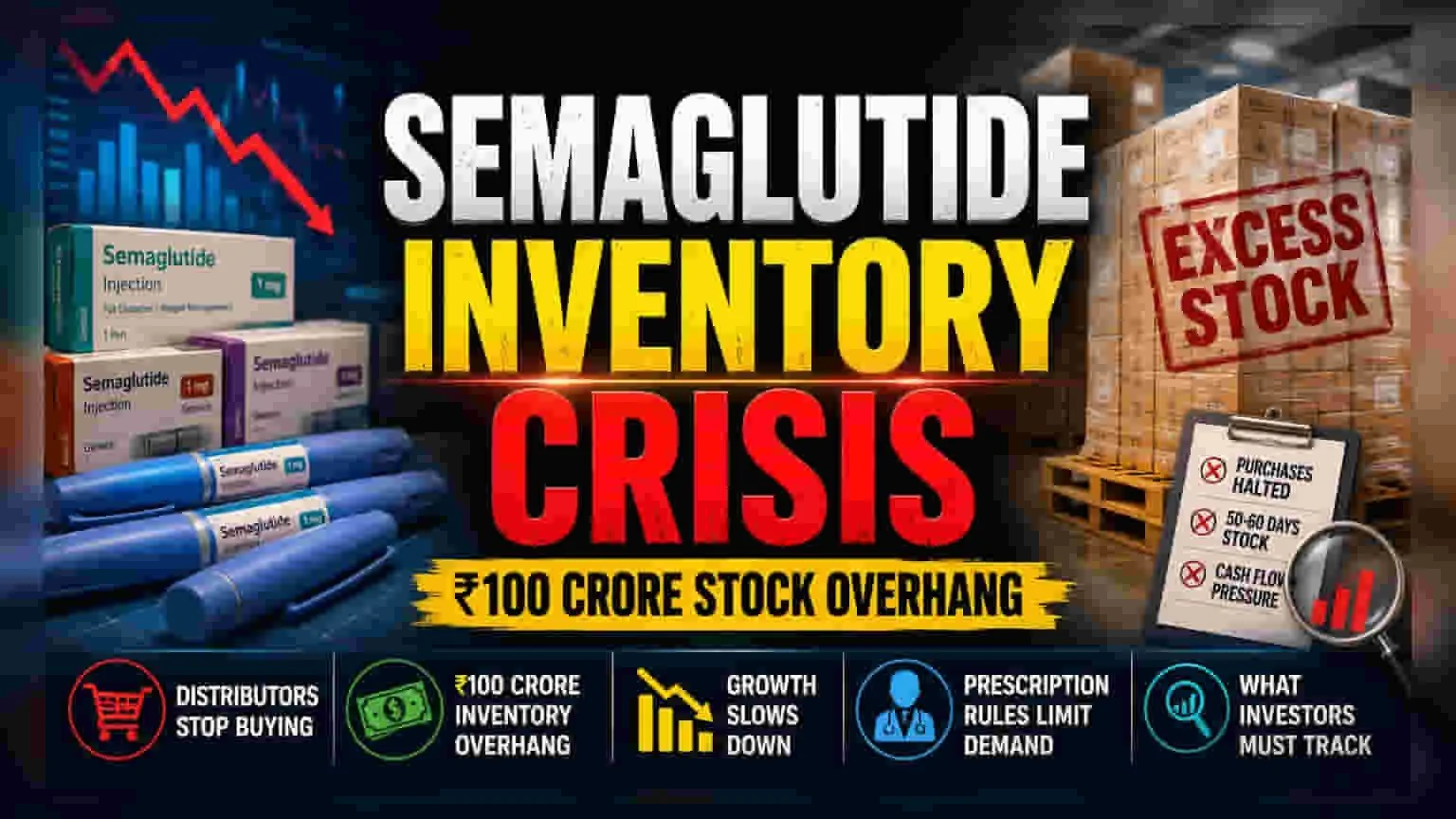
A massive influx of generic alternatives has created a ₹100 crore supply bottleneck in the Indian semaglutide ecosystem, forcing prominent regional distributors to freeze fresh procurement. This abrupt supply-demand mismatch, intensified by tight regulatory oversight on prescriptions, signals a cooling cycle for domestic pharmaceutical manufacturing units.
Key Highlights
- Wholesale distributors are holding up to 60 days of inventory, well above the traditional 30 to 45 days operational average.
- Market growth cooled drastically in May 2026, with monthly value gains dropping to 6% from the explosive 50% recorded in April.
- Strict government health advisories now restrict these GLP-1 therapies to specialized medical professionals, capping mass-market velocity.
- Eli Lilly’s competing drug Mounjaro resisted the trend, posting a 12% jump to ₹136 crore to lead the segment.
The domestic supply chain for semaglutide, a prominent GLP-1 receptor agonist utilized in managing diabetes and obesity, is grappling with severe distribution bottlenecks. Reliable corporate data indicates that unsold medications piling up across trade networks have hit a valuation of ₹100 crore.
Wholesale stockists, who historically maintain an inventory runway of 30 to 45 days, are currently saddled with 50 to 60 days of accumulated products. Consequently, these supply chain intermediaries have paused fresh purchasing cycles from manufacturing plants to clear existing warehouses. This operational gridlock follows an aggressive commercial push executed throughout April, directly trailing the patent expiration of the innovator drug in late March 2026.
The Inventory and Cash Flow Pressure
For public market investors, the rapid accumulation of unmoving stock at the wholesale node represents a critical financial metric. When distribution networks pause their procurement, generic pharmaceutical developers—including prominent market leaders such as Torrent Pharmaceuticals, Sun Pharma, and Dr. Reddy’s Laboratories—experience an immediate deceleration in secondary sales velocity.
Though initial primary sales figures from factories to distributors reflected robust performance during the preceding months, this severe trade buildup signals diminished revenue realization over upcoming quarters. If the massive stockpile lingers indefinitely, generic drug manufacturers will likely face mounting pressure to introduce aggressive trade discounts or credit schemes to flush the system, directly eroding gross margins.
The Patent Rush Backlash
The regional market witnessed an unprecedented, frenzied commercial environment during April, as monthly value metrics surged by 50% alongside a phenomenal 88% spike in overall unit volumes when multiple generic labels entered the fray. However, this hyper-growth trajectory proved mathematically unsustainable over the medium term. By May, consecutive month-on-month value growth across this therapeutic category flattened to just 6%, while absolute unit expansion moderated sharply to 12%.
This sudden statistical correction indicates that the simultaneous market entry of numerous corporate players triggered a severe macroeconomic imbalance. The rapid proliferation of identical generic brands frequently results in aggressive channel stuffing, a practice where manufacturing entities overload supply channels to dominate retail pharmacy shelves long before actual patient demand materializes.
Why Regulatory Rules Matter
This sudden commercial deceleration does not stem exclusively from supply-side over-saturation. Institutional intelligence reveals that recent health ministries and government advisories focusing on GLP-1 formulations are actively dampening wholesale volume trends. These regulatory directives state explicitly that such specialized metabolic treatments must only be prescribed by highly trained endocrinologists and specialists, bypassing general physicians.
This structural prescription mandate introduces a significant layer of operational friction against rapid, mass-market consumer adoption. Although public consumer interest in advanced weight-management formulations remains exceptionally high, the institutional insistence on specialist gatekeeping restricts overall prescription velocity, effectively capping the explosive growth projections mapped out during the initial patent cliff.
Divergent Performance: Semaglutide vs. Mounjaro
Market analysts emphasize that this visible operational slowdown remains strictly confined to the generic semaglutide landscape. Eli Lilly’s proprietary tirzepatide formulation, commercially distributed under the brand name Mounjaro, recorded a resilient 12% revenue expansion to hit ₹136 crore in May, defending its position as the highest-grossing therapy in this category. This divergence demonstrates that while baseline clinical appetite for advanced GLP-1 molecules remains structurally intact, the crowded, newly genericized semaglutide vertical is navigating a isolated price and supply correction.
What Investors Should Track
Equities analysts must carefully observe the ultimate liquidation velocity of this prevailing inventory overhang. Key investment variables include:
The precise timeline required for regional distribution networks to normalize their standard procurement rhythms.
Whether generic drug manufacturers implement direct maximum retail price cuts or introduce margin-diluting trade incentives to clear warehouses.
Potential downward revisions to near-term earnings-per-share guidance among pharmaceutical corporations deeply exposed to domestic GLP-1 rollouts.
Whether federal regulators sustain or escalate these rigorous prescription limitations, which dictating the long-term volume scalability of the mass market.
Future Outlook
The Indian glucagon-like peptide-1 (GLP-1) market is transitioning from an initial, supply-driven launch frenzy into a highly synchronized demand-stabilization phase. While the sudden post-patent influx created temporary logistics pain points, long-term secular demand for accessible weight-management solutions in India remains structurally sound. Analysts anticipate a wave of price consolidation over the next two quarters as top-tier manufacturers with superior brand equity absorb smaller players, eventually stabilizing trade inventories back toward the traditional 30-day equilibrium.
FAQs
Why is there an inventory buildup of semaglutide in India?
Following the patent expiration in March 2026, multiple domestic pharmaceutical corporations launched generic variants simultaneously. This aggressive manufacturing push led to channel stuffing, leaving wholesalers with over 60 days of unsold stock as market supply outpaced immediate patient demand.
Which Indian pharmaceutical companies are affected by this slowdown?
Major domestic drug manufacturers including Sun Pharma, Torrent Pharmaceuticals, and Dr. Reddy’s Laboratories are heavily exposed, as they all introduced generic semaglutide brands immediately after the patent restrictions lifted.
How have government regulations impacted Indian semaglutide sales?
Government health advisories mandated that semaglutide and related GLP-1 therapies should be prescribed exclusively by qualified specialists rather than general practitioners. This policy restricted the mass-market prescription pipeline, slowing down retail consumption.
Is the entire Indian weight-loss drug market experiencing a decline?
No, the slowdown is highly concentrated within the crowded generic semaglutide segment. Eli Lilly’s patented tirzepatide medication, Mounjaro, grew its sales by 12% to ₹136 crore during the same period, indicating steady demand for premium alternatives.