India Growth Story Driven by Resilience Says Piyush Goyal
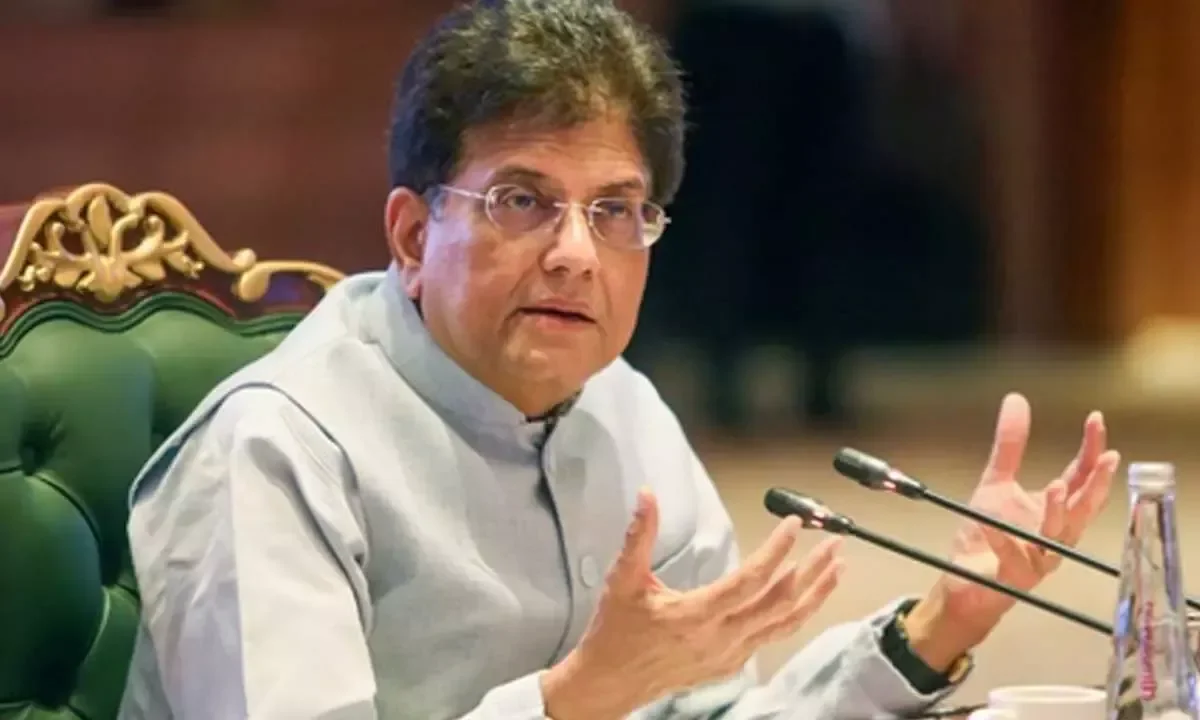
Union Commerce and Industry Minister Piyush Goyal stated that India’s economic trajectory centers on adaptability, continuous institutional learning, and a determination to overcome setbacks. Speaking at the India Global Forum in London, Goyal also revealed that a bilateral interim trade deal with the United States is nearing finalization.
Key Highlights
- India’s national economic growth relies on institutional resilience and feedback.
- A trade agreement with the US is close to completion, pending specific regulatory frameworks.
- The upcoming deal aims to lower baseline tariffs on Indian exports from 50% down to 18%.
- Additional US Section 301 investigations introduce proposed 12.5% duties over labor inputs.
London/New Delhi: Union Commerce and Industry Minister Piyush Goyal stated on Thursday that India’s economic expansion relies heavily on national resilience, systemic learning, and the collective willpower to move past economic challenges.
During an interactive session at the India Global Forum’s UK-India Week 2026 in London, Goyal emphasized that transnational dialogues offer vital avenues for mutual learning and economic partnership reinforcement.
Reflecting on his personal academic background, the minister detailed his past experiences as a chartered accountancy student, recalling a period of intense disappointment after receiving low marks in a law examination despite previously securing the second rank at Bombay University.
Goyal explained that he was highly dissatisfied with the grading and journeyed to Delhi to request a formal re-evaluation. He spent a full day with former Institute president K.G. Somani, who advised him that academic rankings do not dictate future professional success.
According to Goyal, Somani explicitly stated that life achievements do not depend on securing the first or second position in an examination. The minister realized this educational setback served as a critical turning point that reframed his personal philosophy on success.
He observed that young professionals frequently overemphasize competitive rankings, though professional life teaches individuals to manage adversity. Goyal noted that diverse personal interactions and systemic setbacks are fundamental drivers of individual and national growth.
Drawing a parallel to daily routines, the minister remarked that critical aspects of life defy rigid planning, noting that traffic congestion in major metropolitan hubs like London and Bengaluru remains entirely volatile.
The minister affirmed that the unique insights of professional peers and international delegates provide vital energy. He concluded that continuous learning and structural openness to critical feedback remain essential elements for individual development and broader macroeconomic advancement.
The day the United States establishes appropriate statutory mechanisms and legal instruments that secure a clear tariff advantage for India over its global economic competitors, the bilateral trade deal will be finalized, Commerce and Industry Minister Piyush Goyal stated on Thursday.
“Until the framework for getting that competitive advantage can be finalised, we cannot Enter Into Force (EIF) the US deal,” Goyal told delegates attending the India Global Forum in London.
The minister’s statements followed two days of comprehensive ministerial negotiations with US Trade Representative Jamieson Greer, where both officials reviewed interim trade measures to progress the overarching Bilateral Trade Agreement (BTA).
The minister noted that the foundational structure of the deal was initially established on February 6 with broad parameters set. “Our teams have been working since then to finalise the fineprint. There is always a little give and take. We are very close to the deal.”
He stated that international trade pacts are designed to secure distinct comparative advantages, noting that the draft agreement to reduce tariffs on Indian goods to 18% from a baseline of 50% achieved that objective.
Under the initial February framework, India’s projected tariffs were structured below regional competitors; Bangladesh, Sri Lanka, Taiwan, and Vietnam faced a 20% tariff, while Pakistan, Indonesia, Malaysia, Thailand, Cambodia, and the Philippines faced 19%. However, the US Supreme Court subsequently invalidated the reciprocal tariff framework, forcing a reopening of active negotiations.
“With the US Supreme Court striking down the reciprocal tariffs and now with 10% tariffs that expire on July 24, we obviously have to have some reason to be able to bring the agreement that we had agreed upon into force,” Goyal stated.
Broader BTA Roadmap
During the two days of intensive ministerial dialogues, Indian and US representatives focused on strategic pathways required to execute an interim trade pact. Officials analyzed core BTA segments including enhanced market access, digital trade, supply chain integration, non-tariff barrier reductions, and strategic sector cooperation.
This diplomatic session represented the first formal meeting between the USTR and the Commerce Minister since the initial interim trade framework was sketched out in February.
Beyond primary tariff architectures, New Delhi is seeking formal clarity regarding ongoing US actions linked to two separate Section 301 investigations under the Trade Act. Following an inquiry into imported manufacturing inputs linked to forced labor, Washington proposed an additional 12.5% tariff on specific Indian exports, while a second investigation into excess industrial capacity remains active.
Future Outlook
The impending expiration of current US tariff structures on July 24 creates a strict timeline for negotiators to finalize alternative legal mechanisms. As both nations seek supply chain resilience, the resolution of Section 301 investigations will heavily dictate the scope of the final Bilateral Trade Agreement. Trade experts anticipate that the final fine print will require balanced compromises on digital trade policies and market access barriers to withstand further legal scrutiny from domestic courts.
FAQs
What did Piyush Goyal say about India’s growth story?
Commerce Minister Piyush Goyal stated that India’s growth journey is driven by national resilience, continuous institutional learning, and the ability to adapt and move forward after experiencing setbacks.
What is the status of the India-US trade deal?
The India-US interim trade deal is close to finalization. However, it cannot enter into force until a fresh framework is established that guarantees India a clear competitive tariff advantage over its global competitors.
Why did the India-US trade negotiations have to be reopened?
Negotiations were reopened after the US Supreme Court struck down the reciprocal tariff framework that both nations had previously agreed upon in February.
What tariff reductions are included in the proposed India-US trade agreement?
The framework aims to significantly lower tariffs on Indian goods entering the United States, reducing them to 18% from a previous high of 50%.
What are the current challenges facing the Bilateral Trade Agreement?
Key hurdles include resolving the legal issues stemming from the US Supreme Court decision, addressing the upcoming July 24 tariff expirations, and navigating proposed 12.5% additional US duties resulting from a Section 301 investigation.