How Indian EV Makers Bypass Chinese Investment Blocks via Technology Licensing
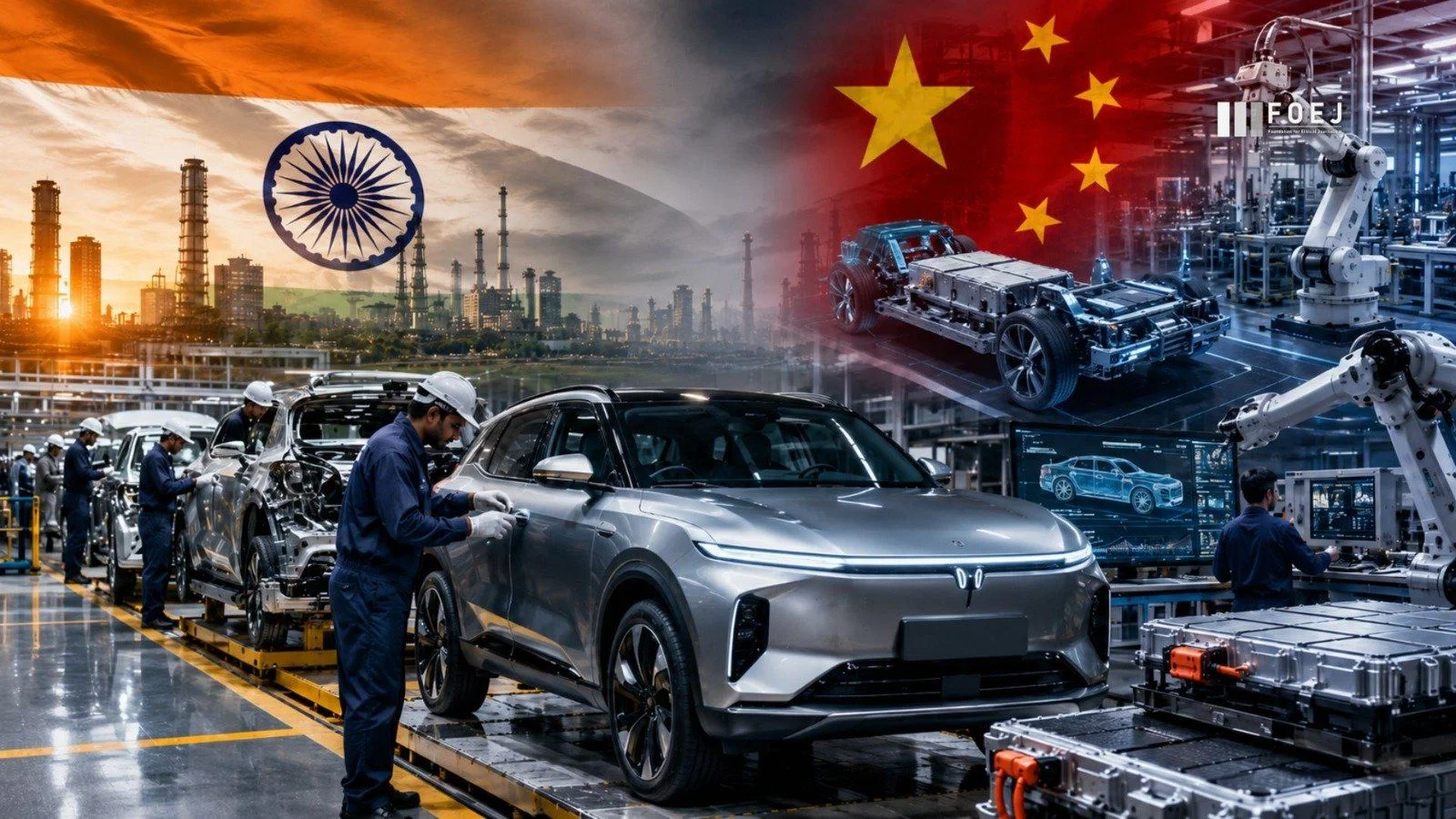
New Delhi’s strict regulatory barriers prevent Chinese electric vehicle manufacturers from establishing domestic factories or investing equity. However, Indian automakers are actively accelerating their clean energy transition by leveraging advanced Chinese engineering, battery architectures, and platform technologies through non-equity licensing frameworks.
Key Highlights
- India enforces strict Press Note 3 rules to block direct Chinese equity investments due to geopolitical tensions.
- Domestic automakers use licensing and parts supply models instead of traditional joint ventures to secure advanced EV blueprints.
- Tata Motors utilizes a Chinese-developed platform via its British subsidiary to build its premium Avinya electric vehicle lineup.
- Chinese components arrive in “black-box” formats, preventing reverse-engineering and creating structural dependence.
The Tata-Chery Sourcing Solution
A pragmatic strategy is reshaping the domestic automotive market as local manufacturers navigate strict geopolitical barriers. Tata Motors, the leading electric carmaker in India, secured a landmark manufacturing agreement to advance its premium electrification strategy. The firm is utilizing a highly sophisticated vehicle platform engineered through a Chinese joint venture involving Chery.
This platform will underpin the upcoming premium Avinya electric vehicle lineup. To bypass intense geopolitical scrutiny from regulators, the two automotive groups structured the entire multi-year arrangement as a strict licensing and parts supply transaction.
The deal avoids shared corporate equity stakes and permanent transfers of ownership. Instead, Tata Motors leverages its British subsidiary to source advanced vehicle architecture from its joint operations based in China. This corporate structure allows the automaker to introduce cutting-edge cars to Indian showrooms without triggering regulatory violations.
Bypassing the Regulatory Wall
This operational loophole has become the standard roadmap for surviving India’s “Press Note 3” restrictions. The regulation mandates prior government approval for all foreign direct investments originating from nations that share a land border with India. Direct expansion plans by major Chinese automotive titans like BYD and Great Wall Motors have repeatedly run into this administrative wall.
In response, domestic Indian conglomerates bypass equity limitations entirely. Companies import complete, pre-assembled manufacturing kits directly from Chinese partners for local assembly.
Tata Motors is not alone in recognizing this operational necessity. Other massive domestic industrial groups, such as JSW Motor, actively explore similar platform-sharing deals. These corporations seek to secure their own positions in the rapidly evolving domestic market.
The “Black-Box” Dilemma
However, this technological inflow is tightly controlled on both ends, creating a profound industrial paradox. While New Delhi restricts Chinese brands from selling directly, Beijing maintains rigid guardrails over outbound transfers of key technical know-how to protect its domestic assets. Consequently, Chinese EV engineering often enters India in a strict “black-box” format.
Complex components remain completely sealed upon delivery to local factories. For example, rare-earth magnet configurations come pre-fitted inside heavy electric motors.
This operational barrier completely prevents local engineering firms from reverse-engineering the technology. Consequently, it locks Indian auto firms into a state of structural dependence. Local brands must rely continuously on Chinese supply ecosystems even as they assemble the vehicles locally.
Despite these hurdles, the economic incentives for Indian car makers are too large to ignore. Local manufacturers operate at a 20% to 30% production cost disadvantage compared to massive Chinese operations because of lower localized manufacturing volumes.
Adopting mature, pre-built Chinese platforms allows domestic brands to save billions in research and development costs. The strategy shaves years off development timelines, helping automakers scale up fast enough to hit critical green emission deadlines between 2027 and 2030. Ultimately, while the cars in showrooms carry fiercely proud Indian names, the structural engineering driving India’s electric future remains intrinsically linked to China.
Future Outlook
The reliance on non-equity licensing deals will likely intensify as India approaches its 2030 climate targets. Domestic carmakers face immense pressure to lower production costs and expand their clean energy portfolios rapidly. While government policies will continue to restrict direct foreign direct investment from neighboring states, the regulatory tolerance for technology licensing will face ongoing scrutiny. Policymakers may eventually demand higher localization rates for critical components to transition the domestic industry from assembly to genuine technological self-reliance.
FAQs
What is Press Note 3 and how does it affect Indian EV manufacturing?
Press Note 3 is a regulation issued by the Indian government that requires prior administrative approval for foreign direct investments from countries sharing a land border with India. It effectively blocks Chinese EV manufacturers from investing equity or building wholly owned factories in the domestic market.
How is Tata Motors utilizing Chinese technology for its Avinya lineup?
Tata Motors is sourcing a vehicle platform developed via a Chery joint venture through its British subsidiary. The multi-year agreement is structured entirely as a licensing and parts supply transaction, avoiding any shared corporate equity stakes.
Why are Chinese EV components delivered to India in a black-box format?
Beijing enforces rigid restrictions on the outbound transfer of core intellectual property to safeguard its technological edge. Components like electric motors arrive fully sealed, which prevents domestic Indian firms from reverse-engineering the technology.
What cost disadvantage do Indian EV manufacturers face?
Indian automakers experience a 20% to 30% production cost disadvantage compared to massive Chinese operations. This gap is driven primarily by lower localized production volumes and higher research and development expenses.